


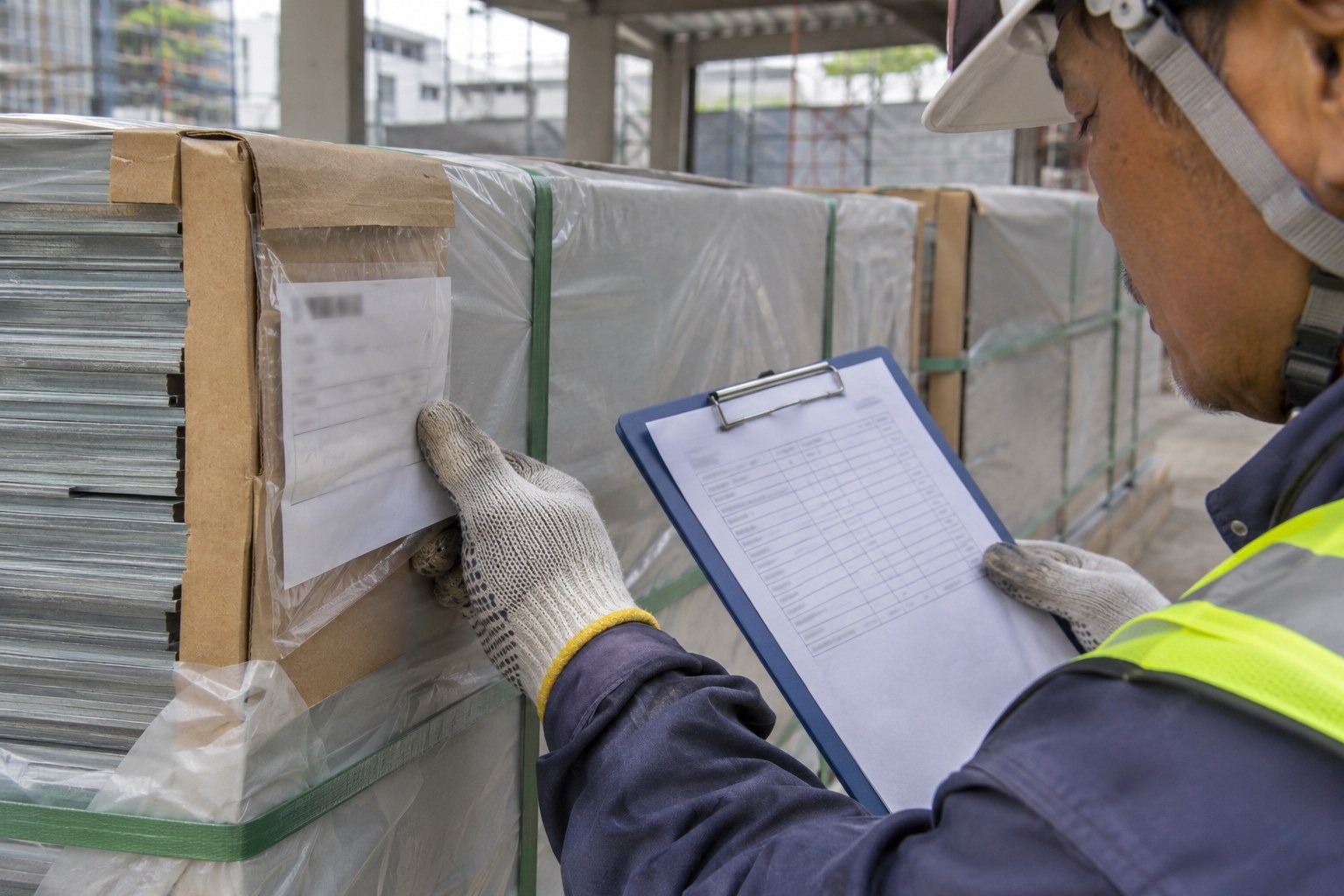
Concept visual: a generic site-handover scene, not a customer project, lifting plan or inspection record.
There is a short moment after a delivery is accepted and before panels reach their storage area when a clear record can become a vague memory. A pack is moved away from the vehicle, someone removes a label to speed up the transfer, and the team later has to ask which panels belonged to which elevation or finish group.
This checklist is for that handover. It does not approve lifting, installation or site safety. It helps the receiving team keep the panel identity, visible-condition record and next storage decision connected while the packs are moved from the delivery point.
Keep the delivery record with the pack, not in somebody’s pocket
Before unloading begins, agree which record travels with each pack or panel group. It may be a delivery note, pack number, project reference or a simple temporary marker agreed by the project team. The important point is that the person receiving the pack can connect it to the record made during the ACP delivery inspection.
If the site uses a panel schedule, drawing revision or approved-finish reference, keep that information available to the person making the transfer decision. A label is not a substitute for the project documents. It is the bridge back to them.
1. Pause for the transfer question
Before equipment is selected or a pack is moved, the team should be able to answer a modest but useful question: where is this pack going next, and what will identify it when it gets there? If the storage area is not ready, it is better to make that visible before the transfer than to create an unplanned holding area with no clear owner.
- Identify the intended storage location and the person coordinating the transfer.
- Keep the pack number or project reference visible where the project needs it.
- Confirm that the relevant receiving record can be found again after unloading.
- Escalate access, space or sequence questions through the site process before moving the pack.
2. Record what is visible before the pack changes hands
Do not try to decide the cause of a mark or damaged outer wrapping during a busy unloading operation. The useful first step is simpler: record what is visible, identify the affected pack and keep the observation linked to the delivery record. The project’s own process decides what happens next.
This keeps a later conversation grounded in the same facts. It also avoids an unhelpful shortcut: removing all protection or redistributing the panels before the team has preserved the condition that was seen at handover.
3. Separate handling planning from installation approval
A pack can be ready to move without being ready to install. The unloading team needs the project’s agreed handling route and storage destination; the installation team still needs its own approved drawings, system details and release process. Treating these as separate decisions prevents a delivery-day shortcut from being mistaken for technical approval.
Where the pack identity needs clarification, return to the technical submittal record and the current project documents rather than relying on a colour description or an old message thread.
4. Hand over to storage deliberately
The move is not complete when the forklift or vehicle leaves. The receiving lead should know which packs have reached storage, which records now identify them, and whether any observation still needs a response. From there, the next reader task is not more unloading advice; it is keeping the panels in conditions appropriate to the project.
Use the ACP panel storage checklist for that next stage. It covers storage planning without repeating the delivery record or assuming that one site arrangement fits every project.
A calm five-minute handover before panels leave the delivery area
- Which panel group or pack is being moved?
- Which delivery or project record identifies it?
- What visible condition should be recorded before transfer?
- Who is responsible for the next storage decision?
- Which question must be escalated before the pack is opened, redistributed or installed?
These questions do not make a site process complicated. They preserve the information needed for the next person to make a good decision.
Need to align unloading with your panel schedule?
Send the pack schedule, access constraints and intended storage location through the contact page. We can discuss the project information that should be clarified before dispatch and receiving; site handling, safety and installation arrangements remain subject to the project’s approved process.
FAQs
Should an ACP pack label be removed as soon as panels arrive?
Not until the project team can still connect the pack to the delivery and panel records it needs. Use the identification approach agreed for the project.
Does a visible mark prove when a panel was damaged?
No. A receiving record can preserve what was observed at a particular time, but it does not by itself establish cause. Follow the project’s agreed escalation and evidence process.
Does unloading approval mean the panels can be installed?
No. Unloading and storage are handling stages. Installation still depends on the applicable drawings, system details, site process and responsible project approvals.
What should be checked before panels are moved into storage?
Confirm the panel group or pack identity, retain the related receiving record, record relevant visible observations and make sure the intended storage location and responsible team are clear.