
ACP Panel Technical Submittal Checklist: What to Confirm Before Approval
 Concept visual for project document coordination; not an approved project drawing.
Before an aluminium composite panel (ACP) order is released, a technical submittal should make the selected material, finish, fabrication information and fixing assumptions readable to everyone involved. This checklist is a planning aid. Approved project drawings, local code requirements and the selected system manufacturer’s instructions always take priority.
1. Identify the panel exactly
Record the panel name, intended application, nominal thickness, core classification, aluminium skin information where specified, coating or finish, colour reference, gloss direction and protective-film requirements. A generic “ACP” label is not enough when several finishes or core options are being reviewed.
2. Match the physical sample to the documents
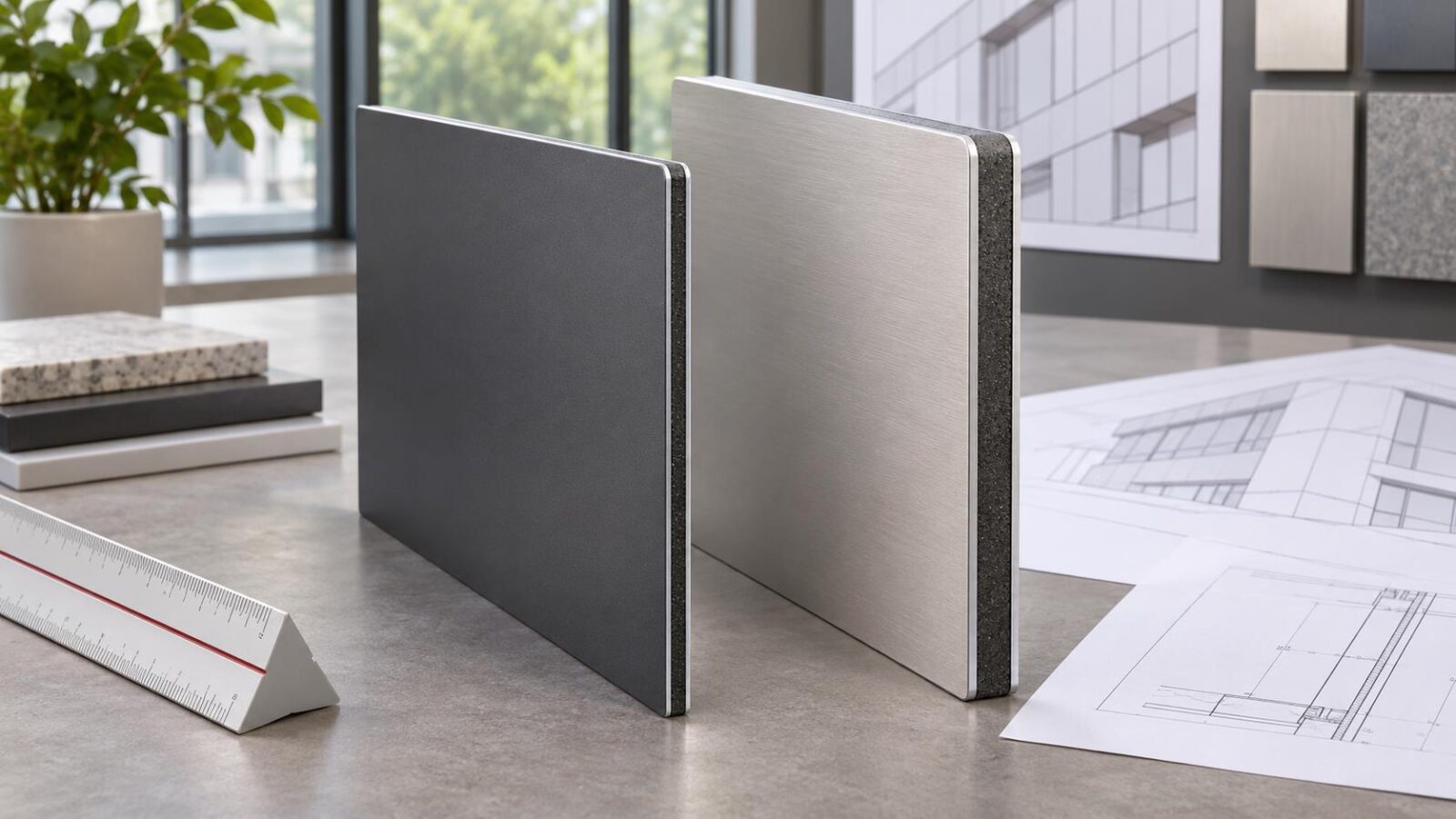
Keep the submitted sample with its reference code. Check colour, finish direction, panel edge appearance and the visible-face orientation against the elevation and schedule. For metallic, brushed or directional finishes, confirm the installation direction before cutting starts.
3. Read fire and test documents in context
Check which product family, thickness range and installation conditions the document actually covers. A report may apply only to a defined assembly, substrate, fixing approach or joint condition. Ask the project team to confirm the applicable requirement rather than treating a classification label as a universal approval.
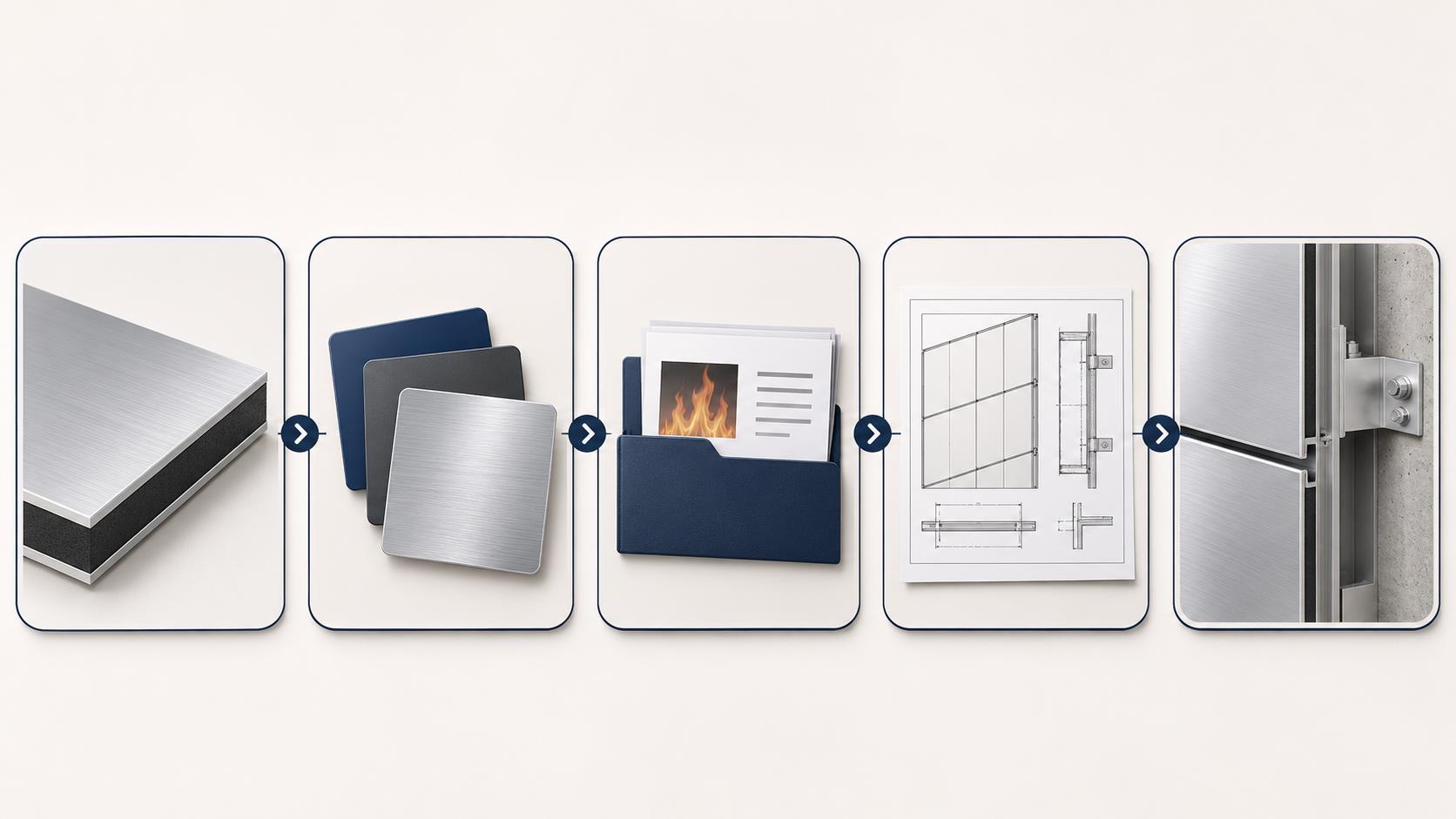 Concept process illustration: product, finish, report, drawing and fixing coordination.
4. Coordinate fabrication drawings before routing
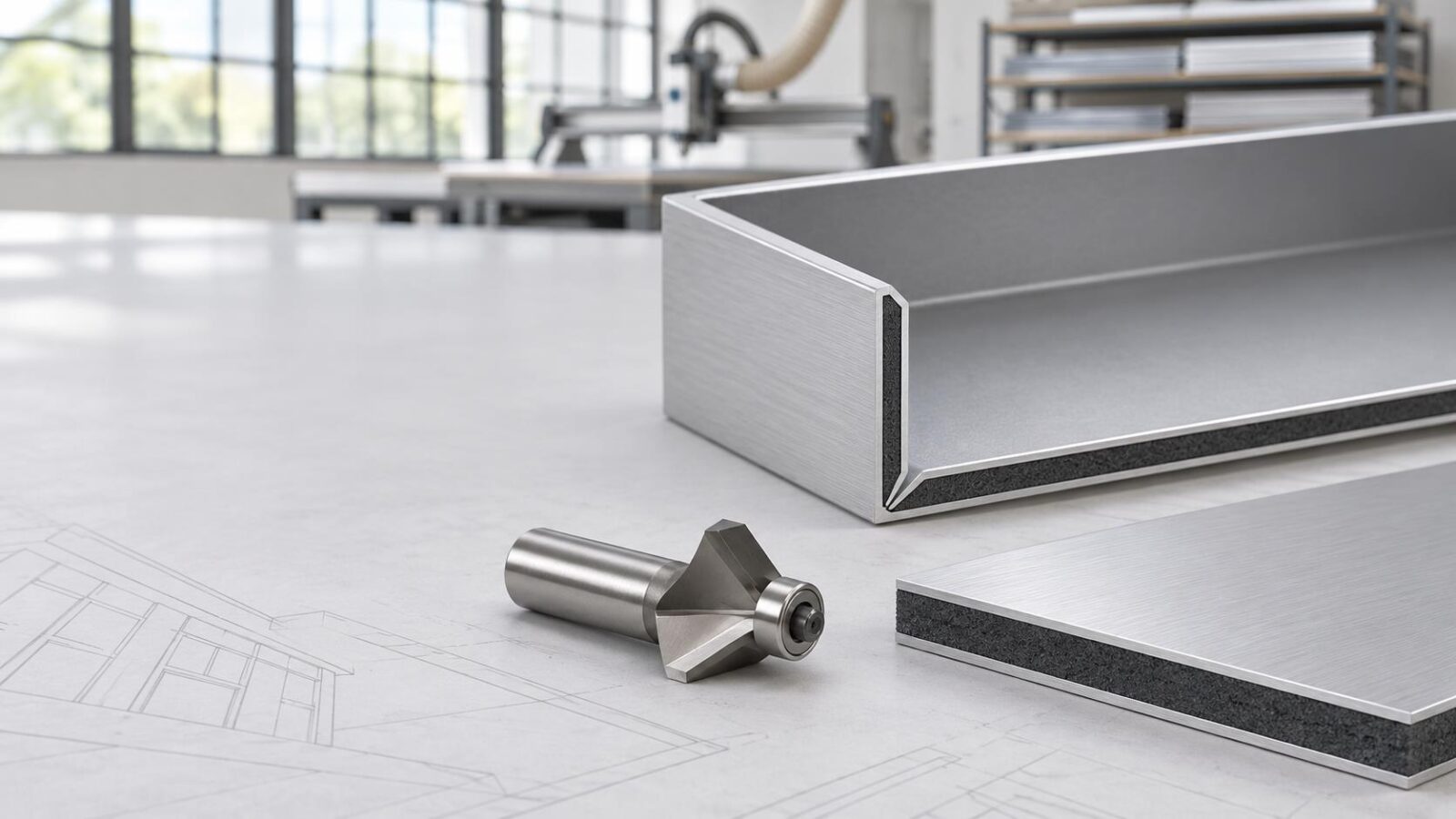
Confirm panel sizes, fold lines, cassette returns, cut-outs, drainage paths, joint dimensions, tolerances and revision number. A trial piece from the actual panel batch is useful whenever the routing and folding detail is new to the project.
5. Review fixing details as a system
Do not approve the panel sheet in isolation. Review the supporting rails, brackets, fixed and sliding points, joint treatment, interfaces and allowance for movement together with the façade detail. Structural design and final fixing selection remain project-specific engineering decisions.
6. Keep a clear release record
Issue one controlled package containing the approved drawing revision, sample reference, document list and any agreed deviations. This gives procurement, fabrication and site teams one shared point of reference before production starts.
Frequently asked questions
Is a sample enough for approval?
No. A sample helps confirm appearance, while drawings and project-specific documents define the system and installation context.
Should every report be checked?
Check the report relevant to the project requirement and confirm that its scope matches the proposed assembly.
When should a trial fold be made?
Before production release when the detail, routing geometry or finish needs confirmation.
Who approves the submittal?
The project’s designated design, engineering or approval team should follow its own documented process.
Need a practical ACP fabrication planning reference? Read our routing and folding pre-fabrication checklist, or contact us to discuss available material documentation for your project.