


Concept illustration: a generic dispatch-control scene, not a record of a customer shipment.
A panel can be correctly approved, cut to the right schedule and still become a problem at handover. The usual gap is not the panel specification. It is that nobody has written down how the finished sheets will be separated, protected, identified and handed to the carrier before dispatch.
This checklist is for the point between factory release and freight handover. It helps a buyer, fabricator and supplier turn “pack it carefully” into a short set of controls that can be checked before the vehicle or container is closed.
Start with the shipment, not a generic packing request
Before agreeing any packing method, put four project details in the dispatch record: the panel schedule, the destination, the transport leg that creates the most handling, and the party who will inspect the goods on arrival. A domestic truck delivery, a mixed consolidation and a long sea route can expose a stack to different handling conditions. The correct response is not to assume one packing format fits every shipment; it is to make the protection plan visible before release.
Use the approved order and the aluminum composite panel range as the identity reference. The packing list should match the panel finish, size, quantity and any project grouping already approved for the order.
1. Confirm the release record matches the panels being packed
Start with a simple comparison: purchase order, approved finish/sample reference where applicable, panel schedule and packing list. If a panel group is released under a project code, that code should remain visible through packing and dispatch. This does not replace the project’s quality process; it prevents a later receiver from trying to reconstruct the shipment from memory.
- Confirm the order reference and destination.
- Keep different finishes, sizes or project areas identifiable as separate groups where the project requires it.
- Record the quantity in each pack and the total pack count.
- Identify the person or team who can resolve a mismatch before loading.
2. Protect faces, edges and stack interfaces
ACP damage disputes often begin with a vague description such as “surface marks on arrival.” A useful packing discussion asks where two surfaces can touch, where an edge can take an impact, and what happens when a pack is moved more than once. Ask the supplier to confirm the proposed face protection, interleaving, edge/corner protection and outer restraint for the actual panel format.
Do not turn this into an unverified specification. The buyer’s practical job is to make the requested protection clear and retain the agreed record. If the panels will be fabricated after arrival, raise any handling limits with the fabricator before dispatch rather than discovering them at the receiving stage.
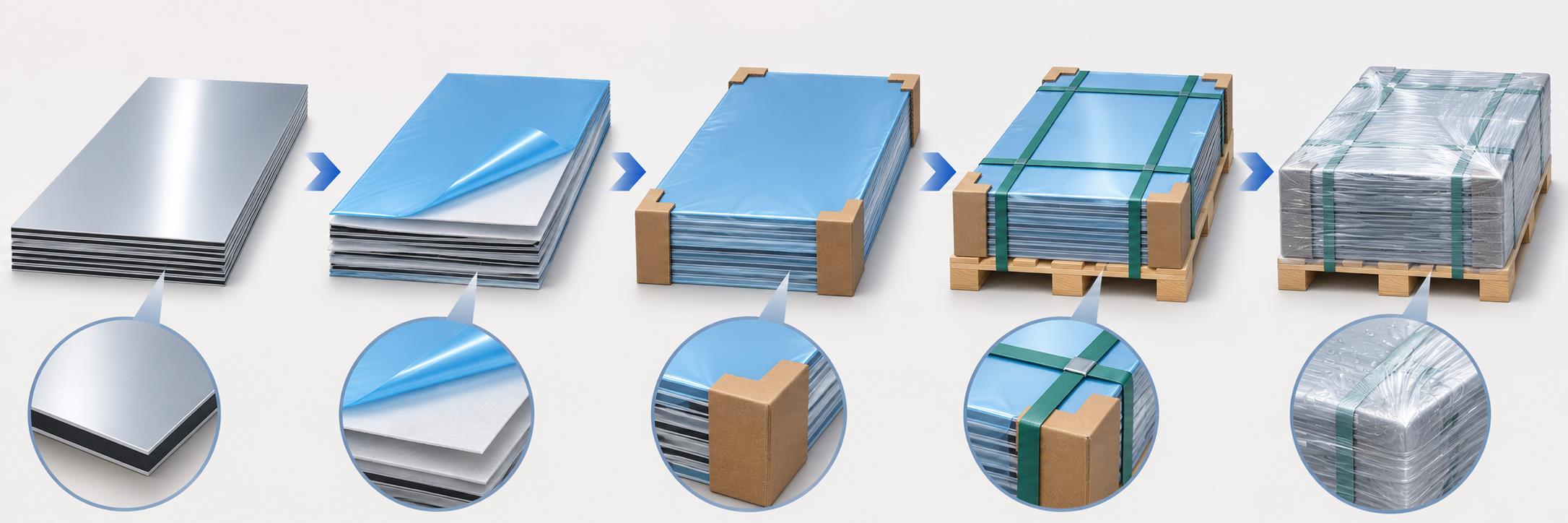
3. Make every pack traceable at the moment of handover
A label is useful only if the receiver can connect it to the documents. Agree what each pack needs to show: order or project reference, pack number, panel group or finish reference when needed, quantity, and handling notes where those notes are relevant. Avoid adding markings that have not been agreed with the site team; unnecessary codes can confuse the receiver just as much as missing ones.
Photographs can be helpful as a handover record when the buyer and supplier agree on their purpose. Treat them as evidence of the pack’s condition at the time recorded, not as proof that transport or site handling cannot create later damage.
4. Check the load plan before the shipment is released
Ask who is responsible for the final loading decision and when the load plan is checked. Packs should not be released solely because the packing list is complete. The dispatch team still needs to confirm that the selected transport arrangement, handling equipment and sequence are appropriate for the pack dimensions and the agreed protection.
This is also the point to reconcile commercial and logistical assumptions. If the quotation compared different packing, freight or insurance scope, reopen that question before dispatch. The ACP quotation comparison checklist can help a project team separate a panel price from the services and handover conditions included around it.
5. Give the receiver a usable arrival checklist
Dispatch is only half of the handover. Tell the receiving team which documents travel with the shipment and what should be checked before unpacking or moving panels into site storage. The receiver should record visible packaging damage, count packs against the documentation, and escalate a mismatch while the handover facts are still clear.
For the next stage, use the ACP delivery inspection checklist to organise receiving records before installation. Once accepted, storage conditions should be confirmed separately; packing controls do not replace a site storage plan.
A short pre-dispatch conversation that prevents avoidable ambiguity
Before release, the project team should be able to answer five questions:
- Which approved panel groups are in this shipment?
- How are faces, edges and stack interfaces protected for this route?
- What identifiers connect each pack to the order and receiving record?
- Who checks the shipment immediately before handover to the carrier?
- What does the receiver check before unpacking or moving the panels?
When those answers are written down, the project is not relying on a generic assurance. It has a handover path that each party can follow.
Need to align a packing plan to your panel schedule?
Send the panel schedule, destination and expected transport method through the contact page. We can discuss the project information that should be confirmed before dispatch; final packing and logistics details should always be agreed for the specific order.
FAQs
Is there one export packing method for every ACP shipment?
No. The appropriate plan depends on the panel format, route, handling points, destination and project requirements. Confirm the controls for the specific order rather than relying on a generic description.
What should be on an ACP pack label?
Use the identifiers the receiving team needs to match the pack to the order and packing list, such as an order or project reference, pack number, quantity and relevant panel grouping.
Do dispatch photos guarantee that panels will arrive undamaged?
No. They can support a handover record at the time taken, but transport and site handling still need their own checks.
When should the receiving team inspect the shipment?
As early as the project process allows, before unpacking or moving panels into storage, so visible packaging damage, count differences and document mismatches can be recorded clearly.