
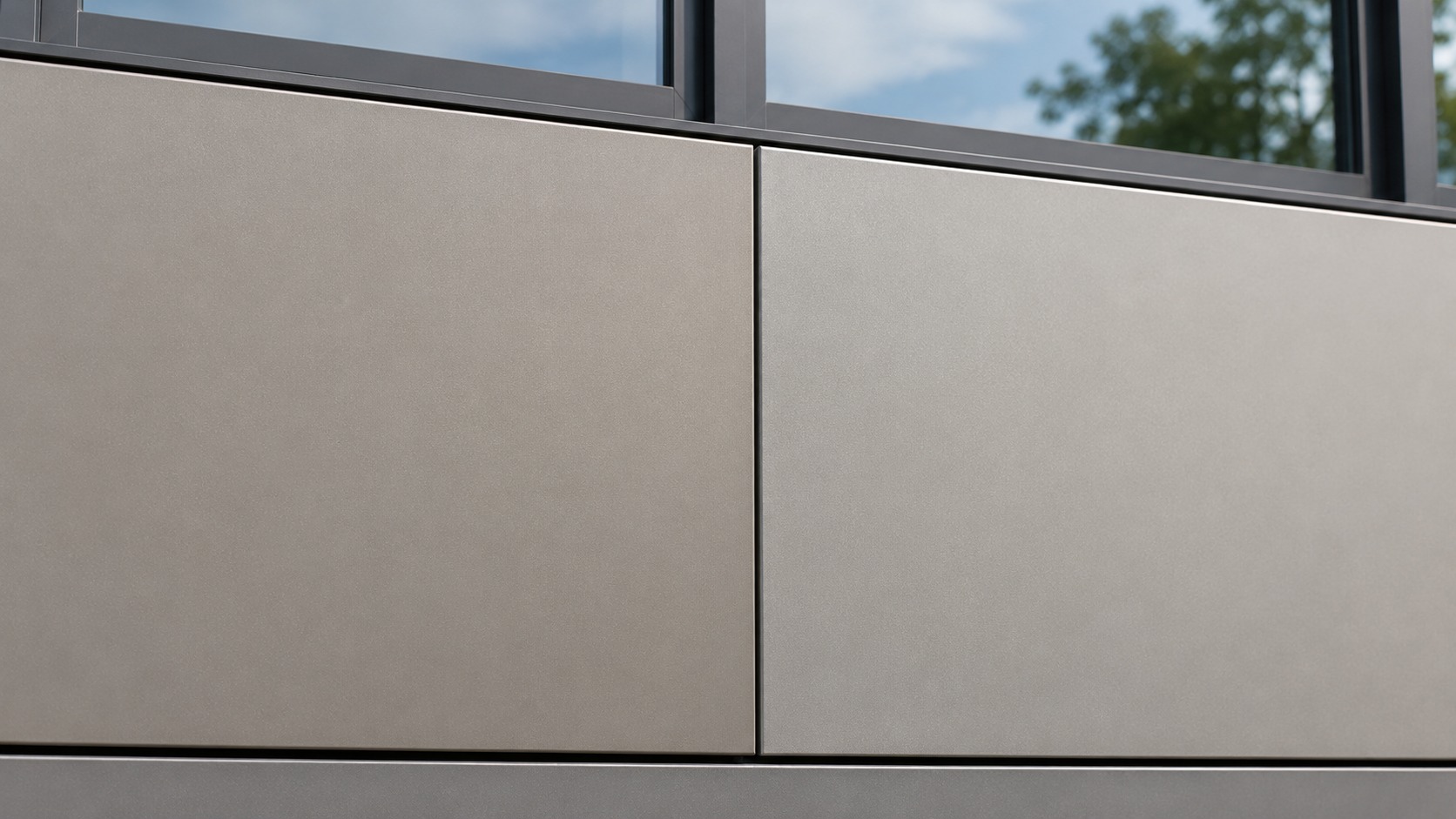
Two panels on the same elevation appear to be different shades. The pack labels carry the same colour code. It is tempting to call one panel defective, but the code alone does not tell you whether the panels were viewed in the same light, installed in the same direction, or drawn from the same approved material reference.
Hold the affected area long enough to make one controlled comparison. The aim is to give the supplier and project team a question they can answer, instead of sending photographs that hide the conditions under which the difference appeared.
First, compare like with like
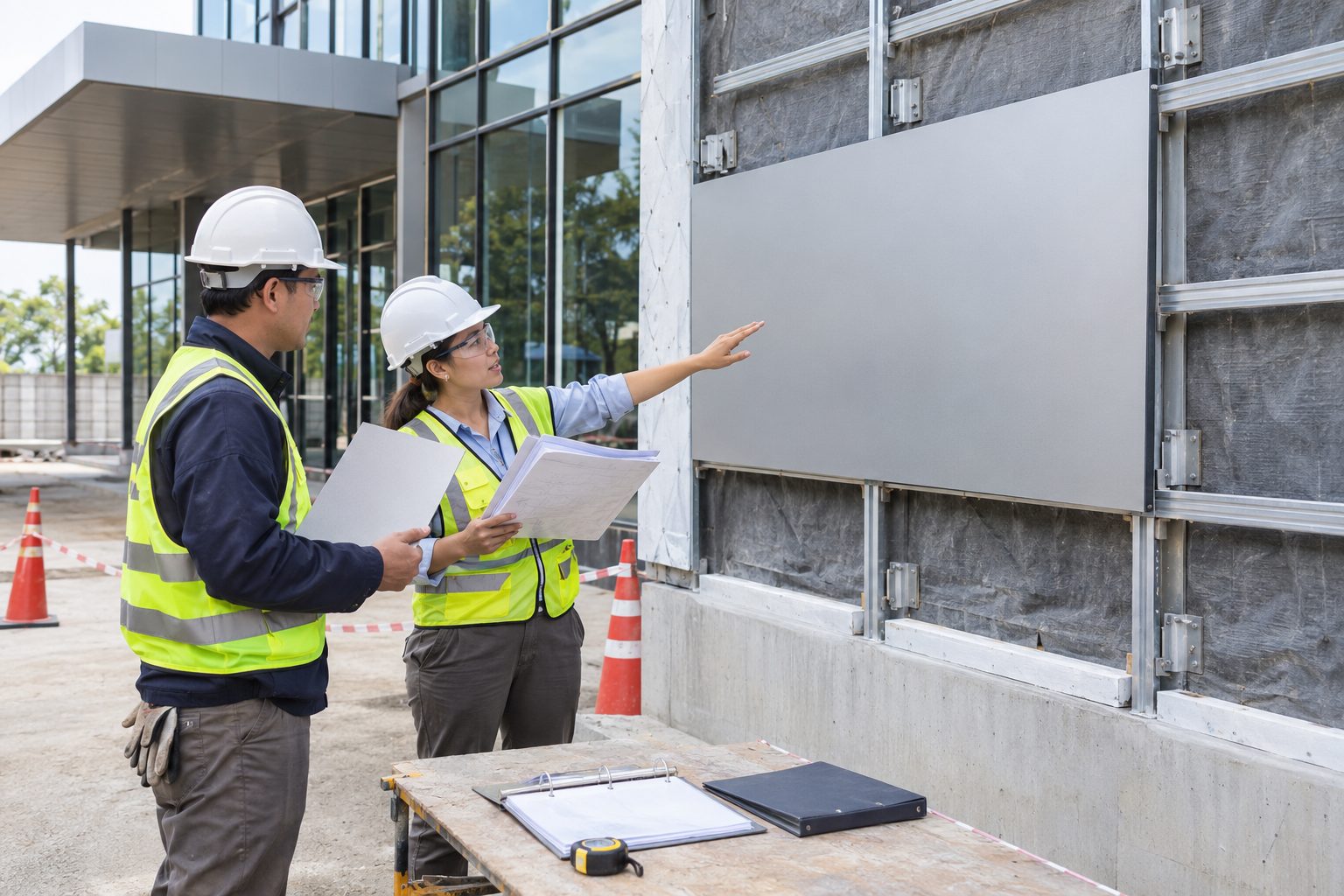
Stand at the agreed viewing position and photograph the panels together in one frame. Record the time, light condition and panel IDs. Compare the same panels again from another angle. A change that follows the viewing angle points to a different investigation than a difference that remains under both views. A phone image taken on separate days is a poor colour reference.
Next, place the retained approved sample beside both panels under the same light. Record which face and orientation of the sample were approved. Do not approve a replacement from a screen image alone. The finish approval guide explains how to keep the physical sample connected to the order and drawing revision.
Then separate appearance from identity
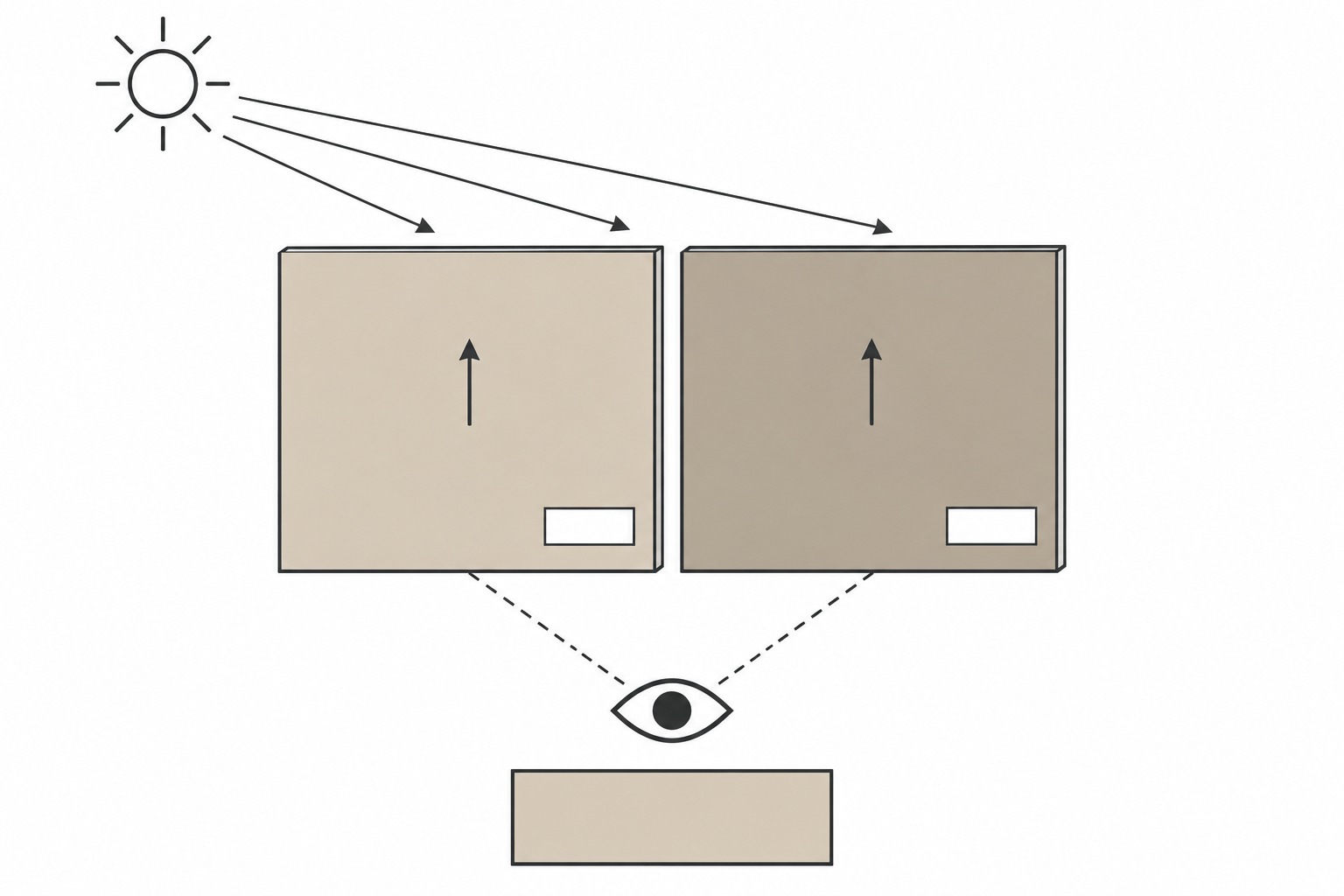
If the selected finish has a directional appearance, check the orientation marks on each panel against the approved layout. ALUCOBOND’s published finish guidance warns that several of its metallic, mica, brushed, printed and textured finishes can show a visible difference when directionality is not maintained. That is guidance for those named finishes, not a blanket specification for every ACP product. Ask the supplier which direction rules apply to the material on this job.
If the arrows agree, compare the material identification on the packs, order and retained sample. Record batch or production references if the supplier supplied them. ALUCOBOND also notes that production runs can vary in shade for some finishes. A shared colour name is therefore not enough to establish that two supplied panels came from the same approved reference. The supplier should confirm the actual material and acceptable appearance against the agreed project sample.
| What you observe | Question to send to the responsible party |
|---|---|
| Difference changes as you move | Does this finish have a specified viewing or installation direction? |
| Difference remains in the same light and angle | Do the pack IDs, batch references and approved sample refer to the same material? |
| Panels match each other but not the approved sample | Which physical sample and revision controlled the order? |
| Only one part of the elevation is affected | Which panel IDs are involved, and can unaffected work proceed? |
This table identifies the next question. It does not diagnose a defect or set a colour tolerance.
Send a comparison record, not a verdict
Send one photo showing both panels and the sample in the same light, a second photo showing pack labels or panel IDs, and the relevant order and drawing revisions. Name the affected area. Ask the supplier to confirm the finish identity and any orientation or batch requirements for the selected product. The project team can then decide whether to accept, rotate, replace or hold the affected panels under the contract and approved sample procedure.
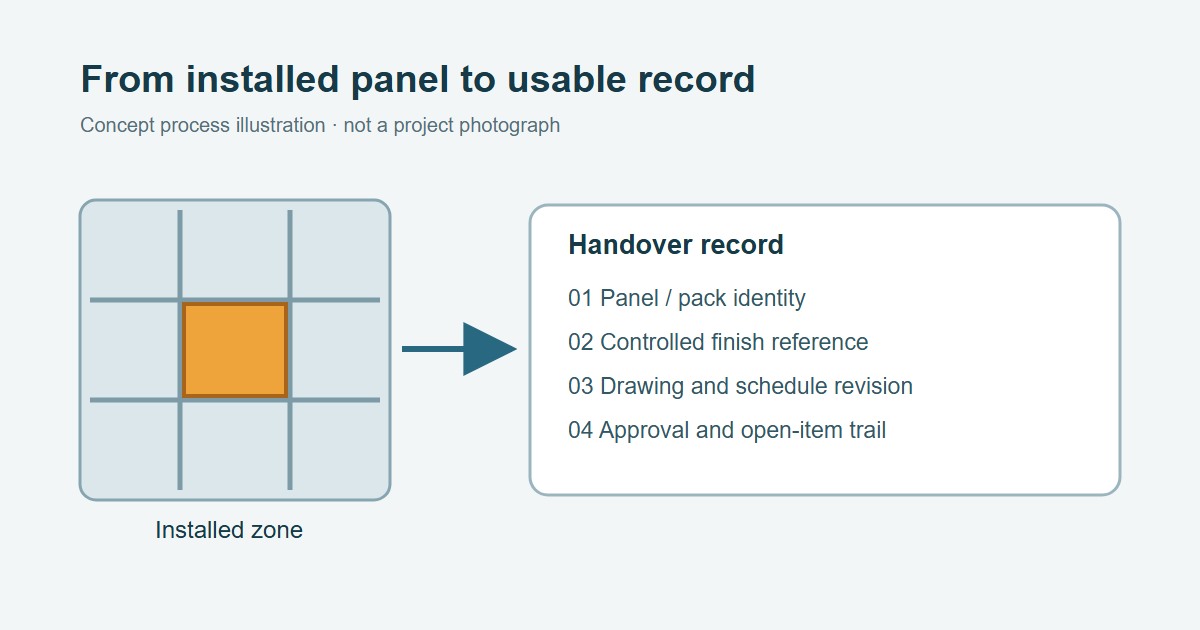
For future work, carry the panel and finish identity into the facade handover record. That gives a later replacement order more than a colour name to work from.
Source note: ALUCOBOND finish consistency guidance describes directional appearance and possible production-run variation for its listed finishes. Apply the selected manufacturer’s instructions and the project’s approved sample; do not transfer another brand’s tolerances to Jinxiang panels.