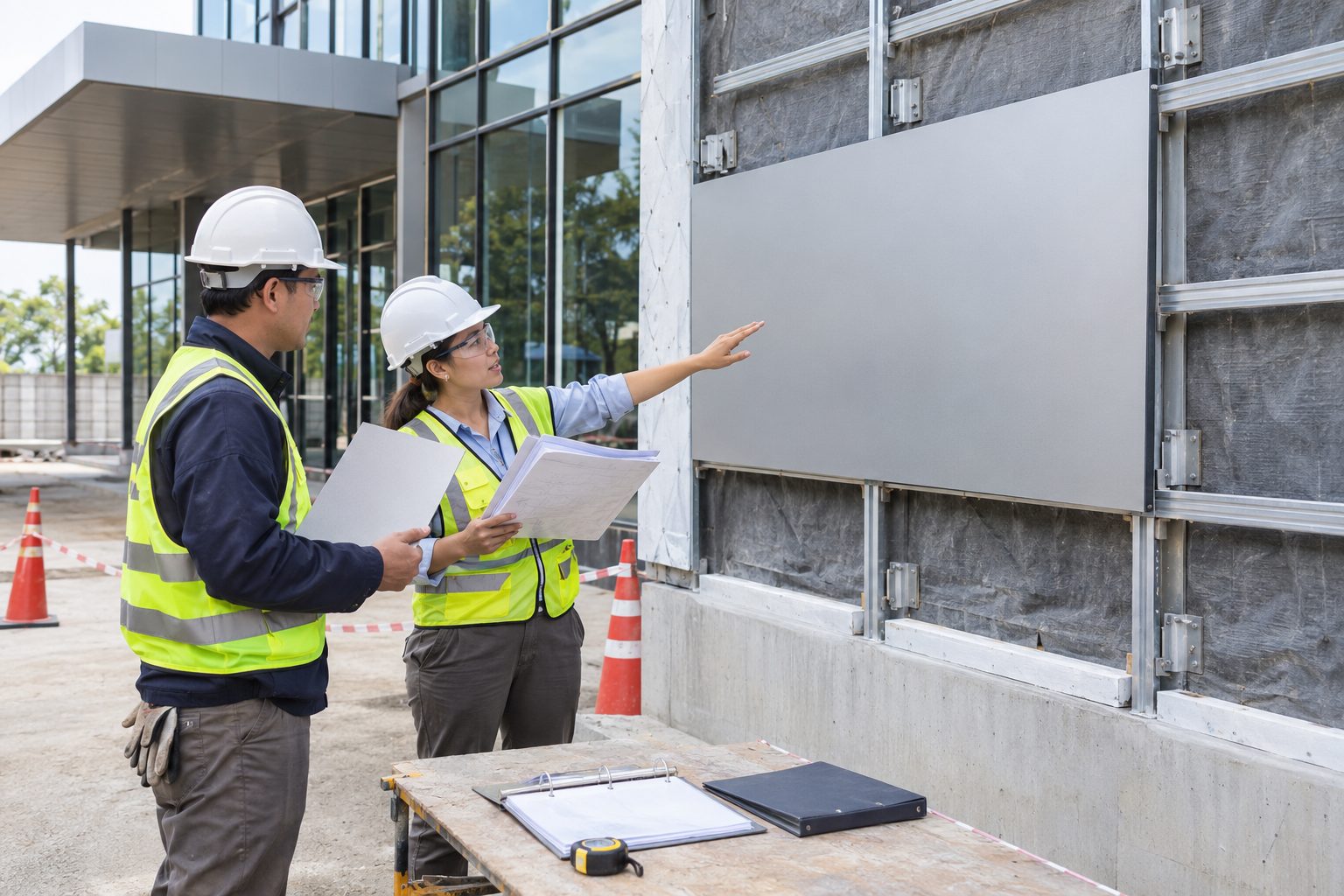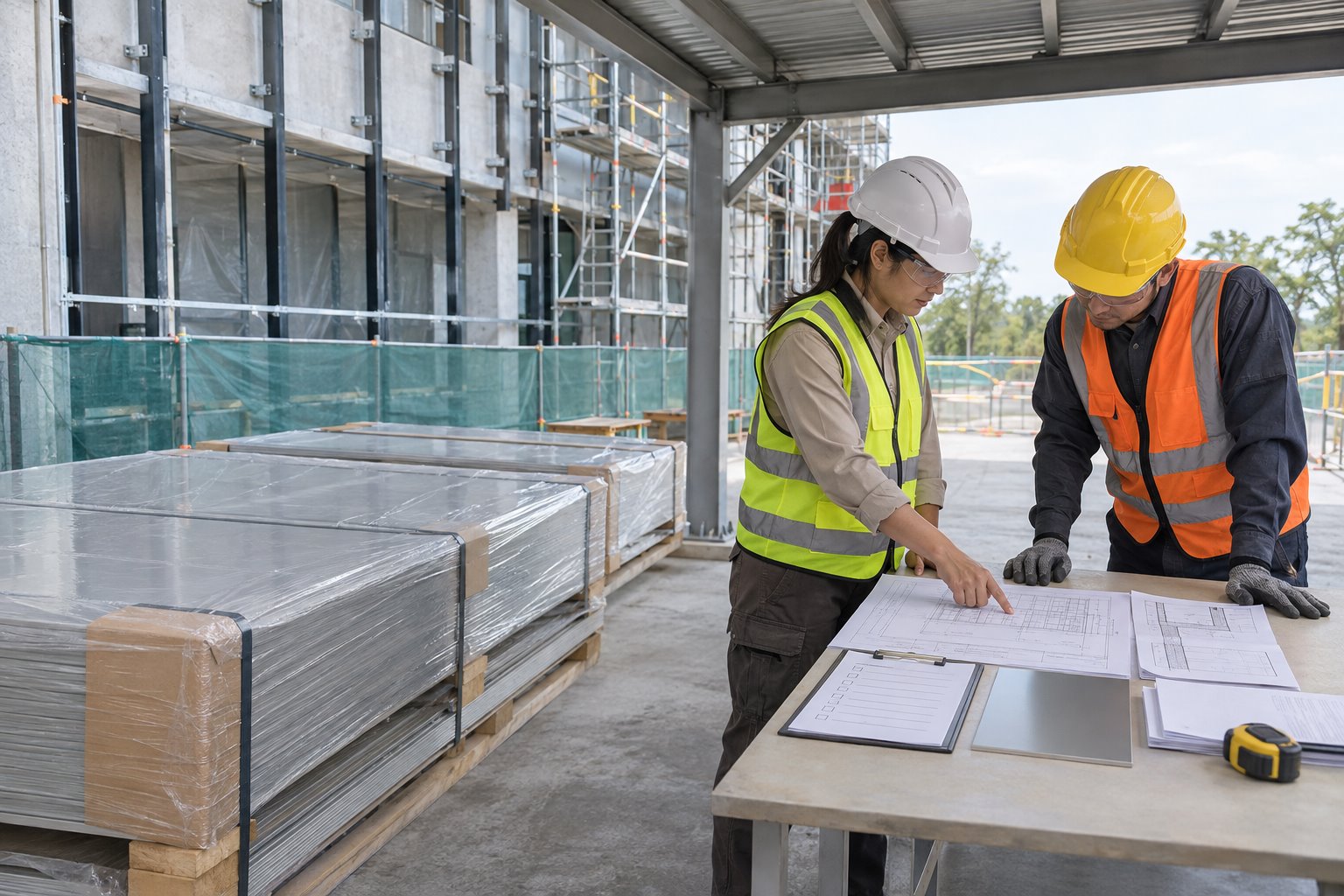

A pressure washer may be on site, but a handover note that says only “ACP panels” does not tell a cleaner whether to use it. The finish on the wall, the cleaner being proposed and the panel system’s own instructions matter more than a pressure setting copied from another project.
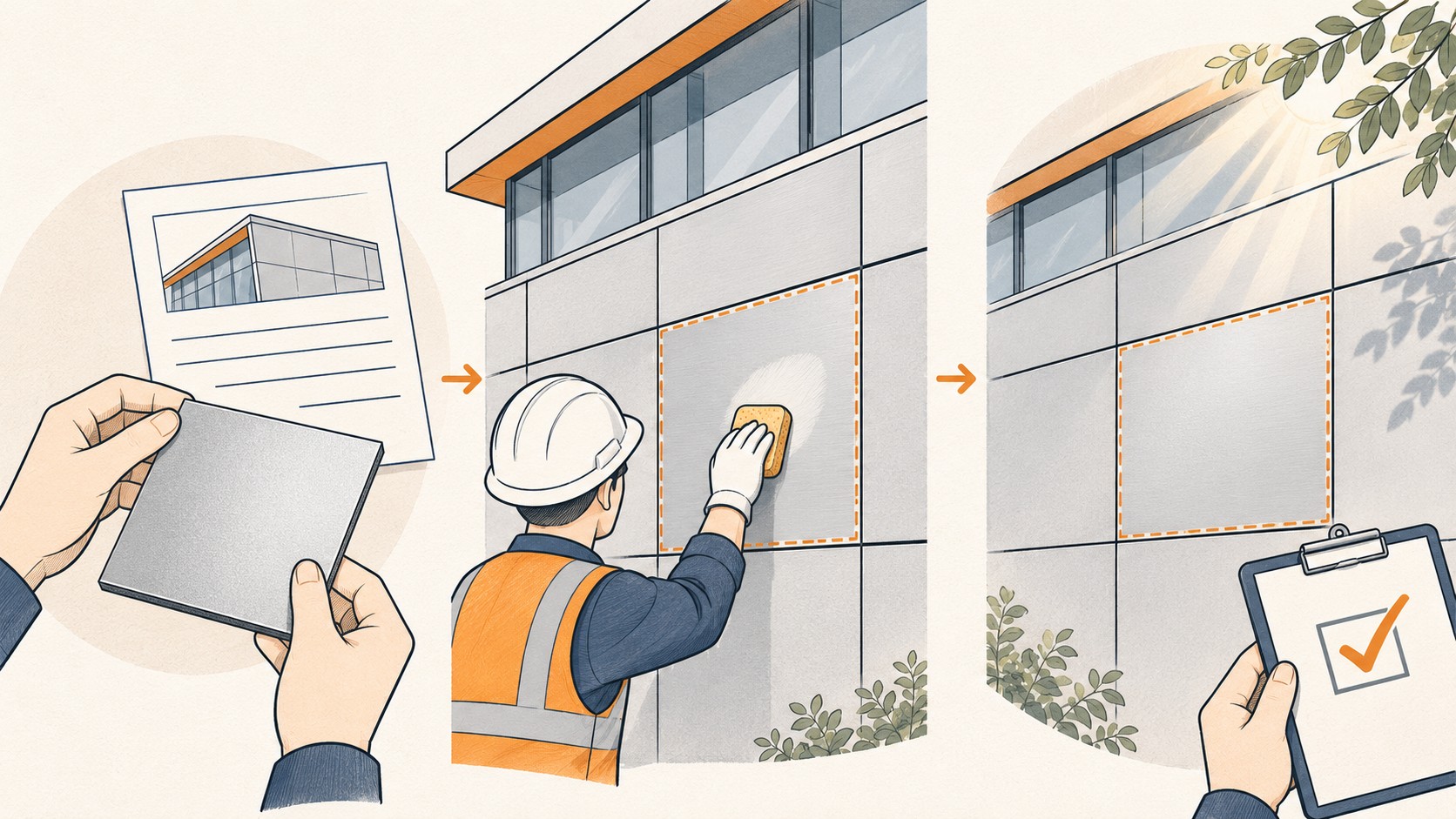
Before cleaning a whole elevation, identify the installed material, choose a method its manufacturer permits and record what happened on a small test area. If the material cannot be identified, that is the first problem to solve.
Pressure-washer guidance belongs to a product
Published manufacturer instructions differ. PREFA’s PREFABOND cleaning guidance says not to use high-pressure cleaners. ALUCOBOND’s balcony processing instructions allow a pressure washer within a stated limit for their covered product. Those are product-specific instructions, not two competing settings for Jinxiang panels.
Find the instruction for the panels actually installed. Finish type matters too: an ordinary painted surface, an anodized surface and a special texture may need different care. Use the selected manufacturer’s document for the cleaning agent and tools. If water at joints, edges or penetrations is a concern, ask the wall-system designer. A test of visible finish appearance alone cannot approve the entire wall assembly.
Start with the identity of the installed finish
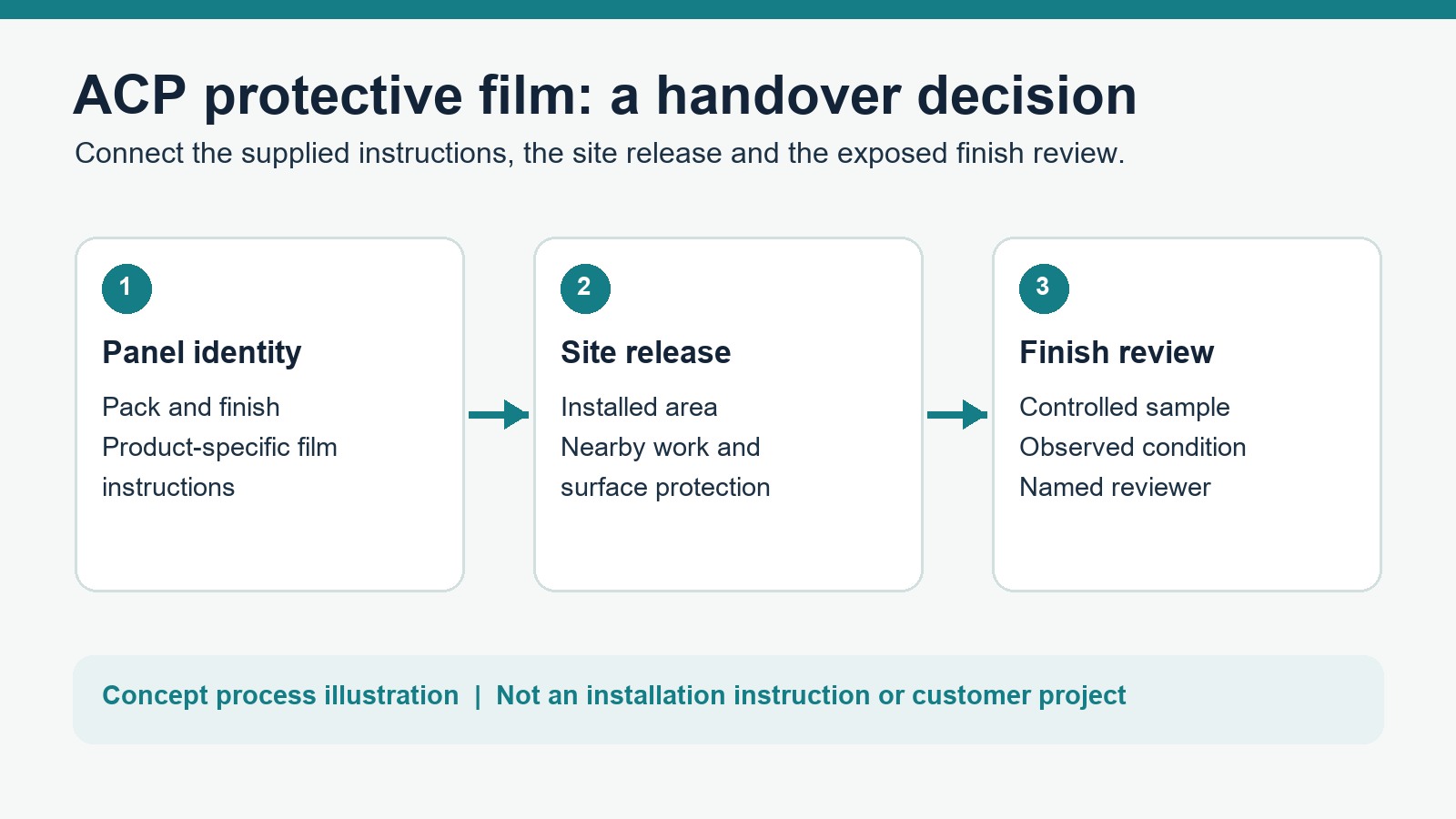
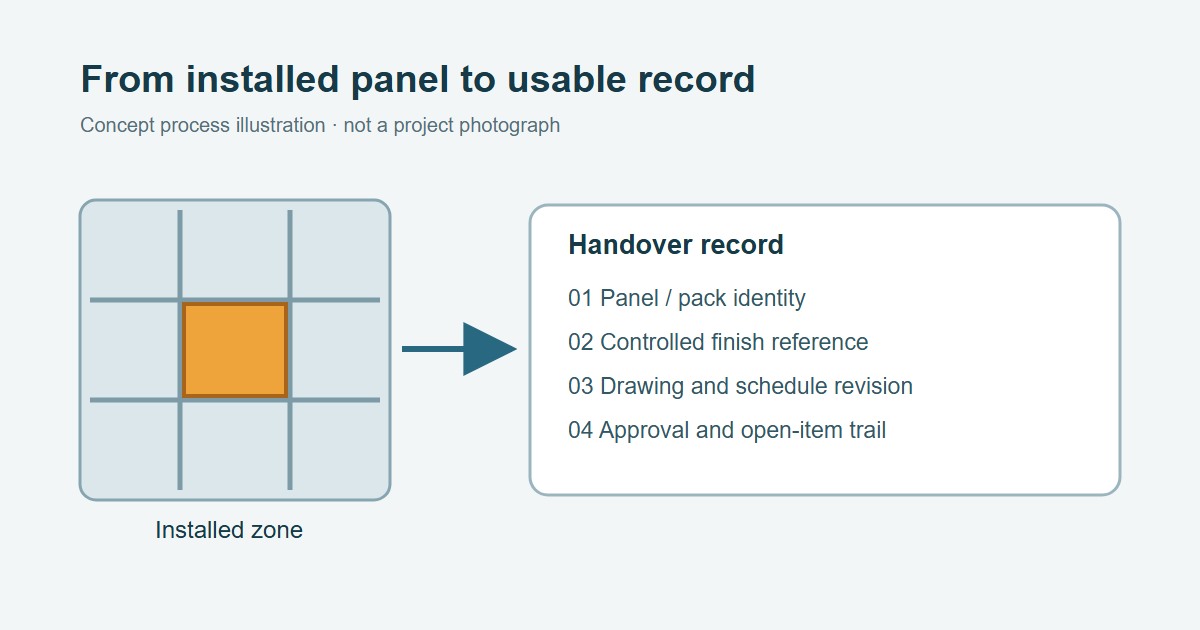
Look for the product identification, finish or coating reference, approved sample and installation record. The facade handover record explains why panel location and finish identity should survive beyond installation. A colour name on its own is a weak substitute: it may not identify the coating or the cleaning instruction that applies.
Ask the panel supplier for the current cleaning guidance for that exact product and finish, then check the cleaner manufacturer’s instructions and safety data sheet. ALPOLIC’s cleaning library also makes that product-and-agent boundary explicit. If the installed material or finish remains uncertain, hold the proposed method until the supplier and building team resolve it in writing.
Let a small test answer a small question
Choose an inconspicuous area that represents the finish to be cleaned. Agree the method with the building team, take a clear “before” photograph, and use only the method allowed by the applicable documents. After rinsing and drying as instructed, compare the test area with the adjacent surface in the same light. Watch for a change in gloss or colour, streaking, residue or marks caused by the tool. If any appear, stop and ask for a revised method rather than extending the work.
The test answers whether that method visibly affects that area under those conditions. It does not prove that another finish, a weathered elevation or a joint detail will behave the same way. Record the boundary instead of turning one good patch into a blanket permission.
A first-clean record the next team can use
Keep one short record with the cleaning instruction. It saves the next contractor from guessing what “cleaned successfully” meant:
| Record field | Write down |
|---|---|
| Panel identity | Product, finish/coating reference and test location. |
| Authority | Manufacturer guidance and revision; building-team approval of the method. |
| Trial method | Cleaner, dilution if applicable, tool, rinse and drying conditions. |
| Observation | Before/after photos in comparable light, visible change and any area held. |
| Decision | Who approved wider work, what surfaces it covers, or what needs clarification. |
If the test fails, the record is still useful. It identifies the product, method and observation the supplier needs to advise on a different approach. If the panels are Jinxiang material and the finish reference is available, send that reference, the proposed cleaner and test photographs through our contact page so we can identify the relevant product information. The building team remains responsible for the cleaning plan and site safety.