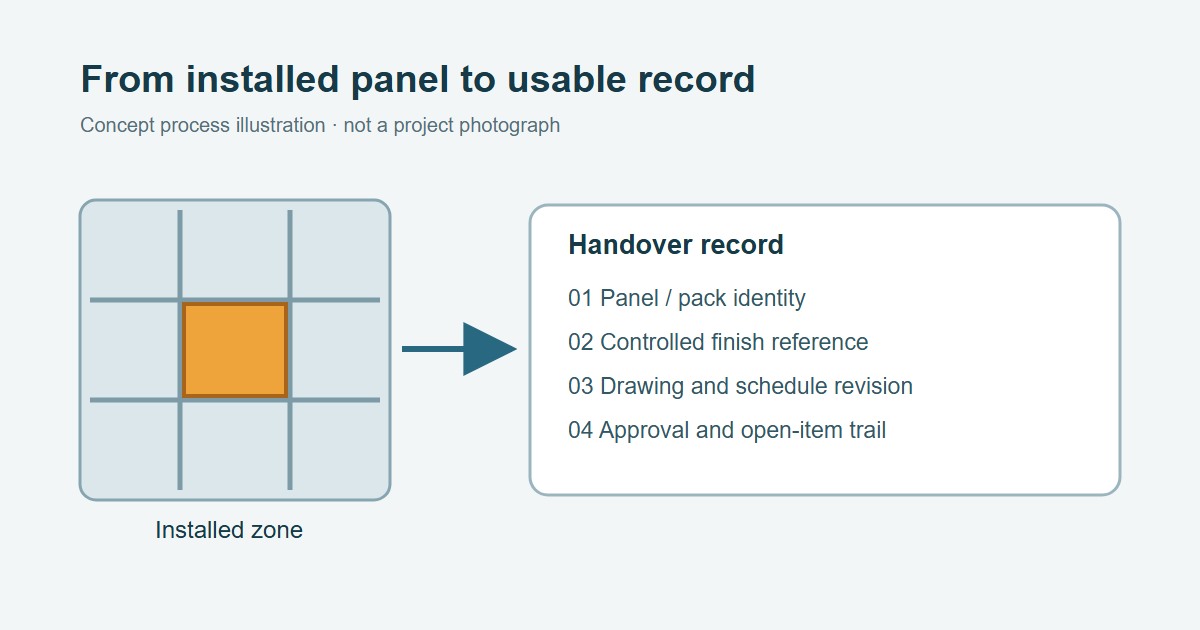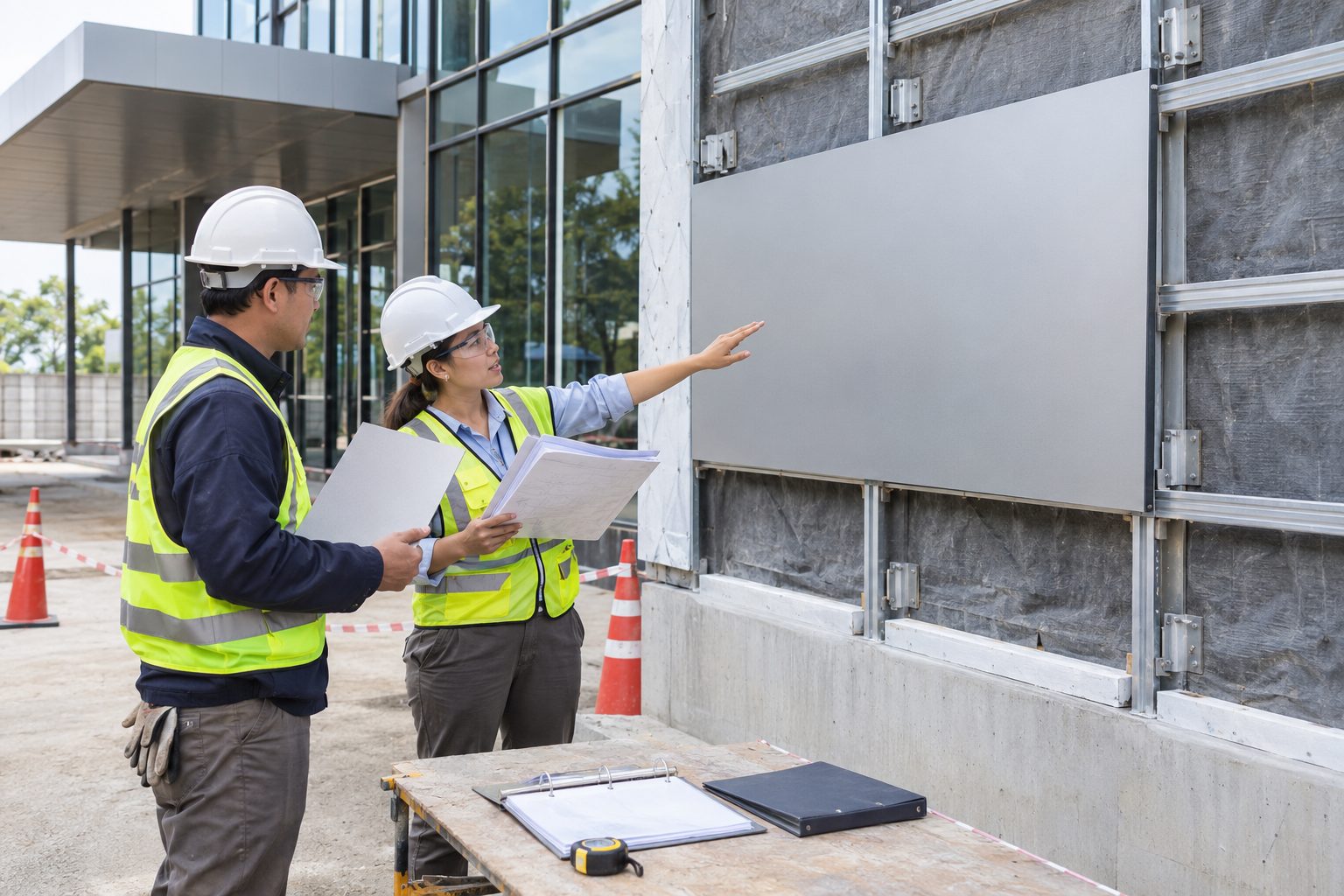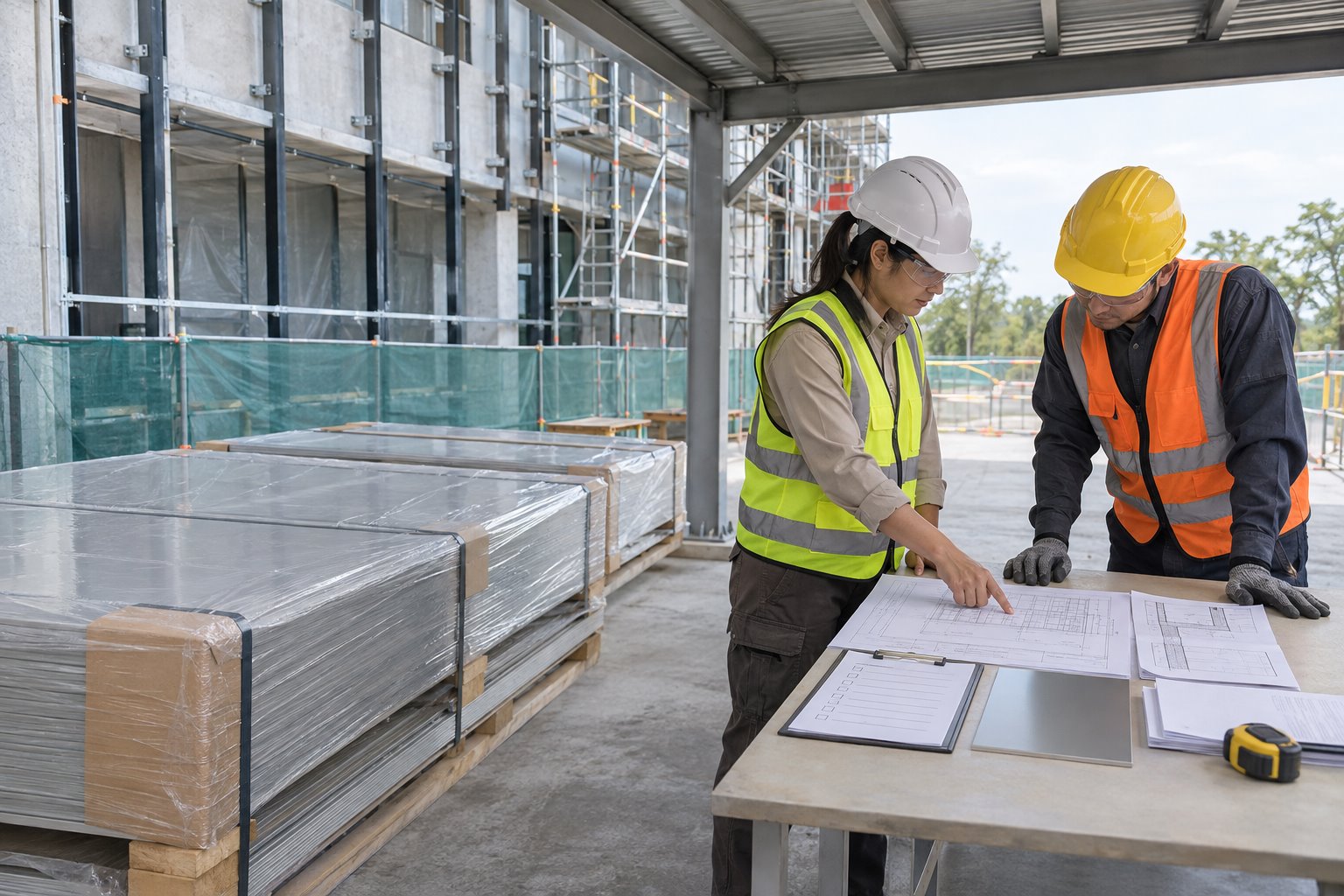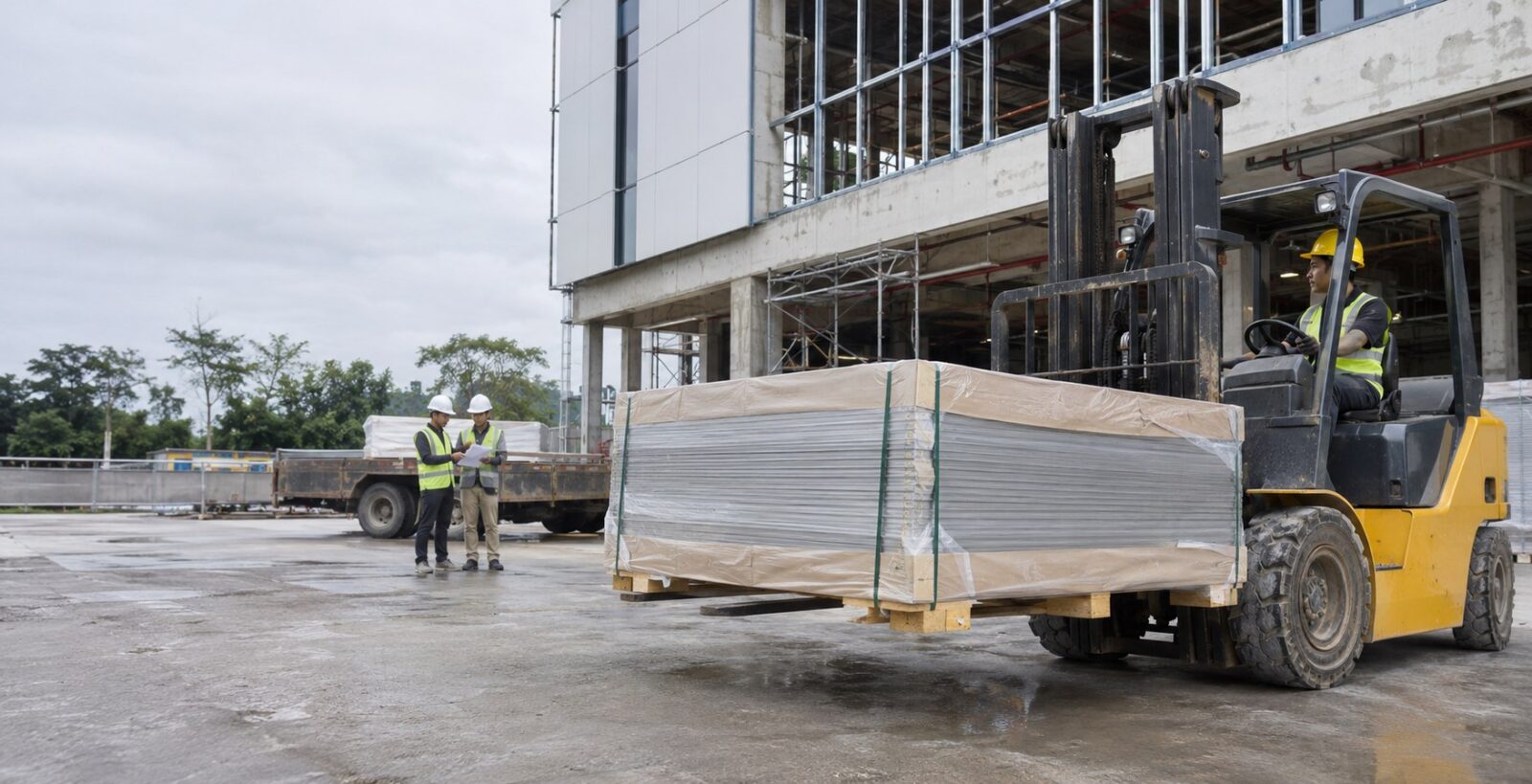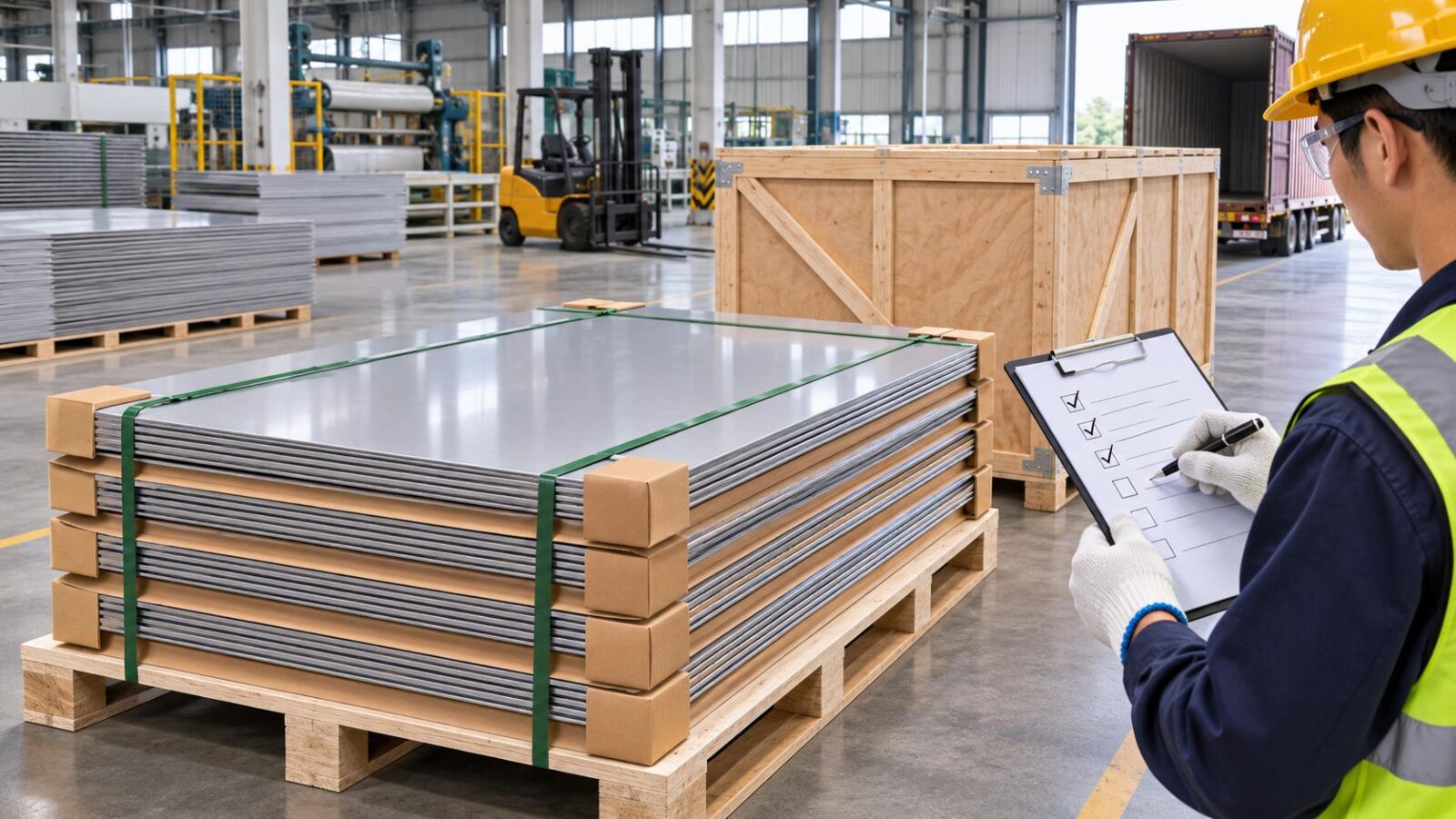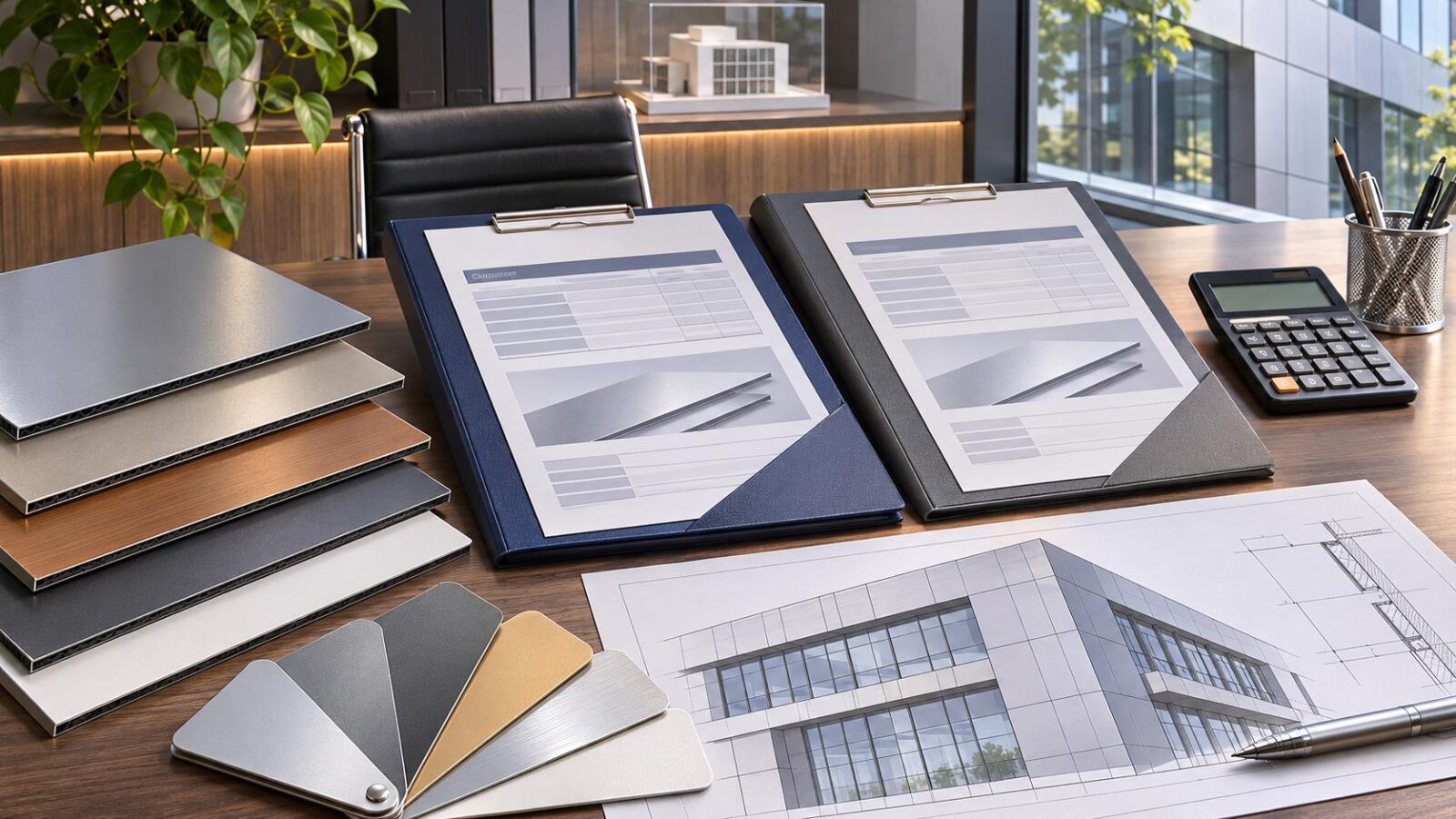

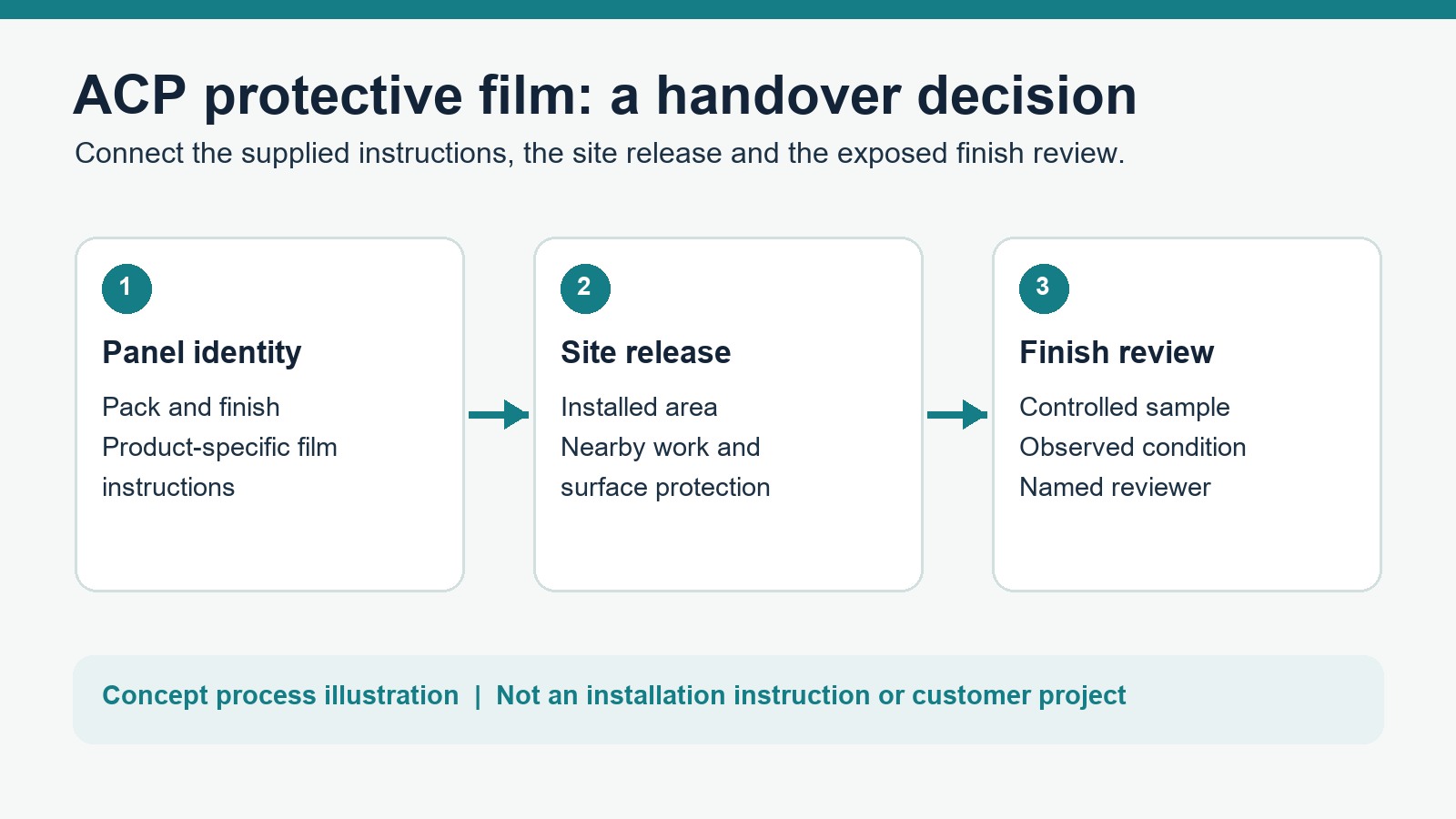
Concept illustration: a project handover sequence, not a Jinxiang installation instruction or customer project.
The panels are on the wall, but the protective film still covers the finish. One crew wants to remove it so the facade can be inspected; another expects it to stay in place while nearby work continues. If nobody owns that decision, the site may lose the chance to compare the exposed surface with the approved sample and record its condition at the right moment.
Before removing ACP protective film, connect three things: the instructions supplied for this panel, the project’s release of the installed area, and the person who will inspect the finish after the film comes off. Film removal is a handover step, not a substitute for finish approval or installation acceptance.
Identify the actual panel and film first
Start with the pack or panel identifier and the approved finish reference. Ask the supplier for the instructions applicable to that product and film. A practice used for another ACP brand, coating, storage period, or site condition should not be copied into this project without checking it. Manufacturer guidance differs, and some protective films also carry orientation markings used during fabrication and installation.
If the panel has been stored or moved between work areas, compare its identity with the storage record and the issued panel schedule. Film colour or a handwritten note on the wrap cannot establish the finish or batch by itself.
Agree when the area is ready to expose
The installer should confirm that the relevant panels are fixed and that the project team has decided how nearby trades will protect the exposed surface. Check whether the supplied instructions set conditions for film removal, and record any site condition that prevents those instructions from being followed. Do not turn a generic timetable into a project rule.
The installation release checklist deals with the earlier decision to start installing a panel group. Film removal comes later: it makes the finished face visible for review. If a panel group is still under an unresolved installation hold, removing its film does not close that hold.
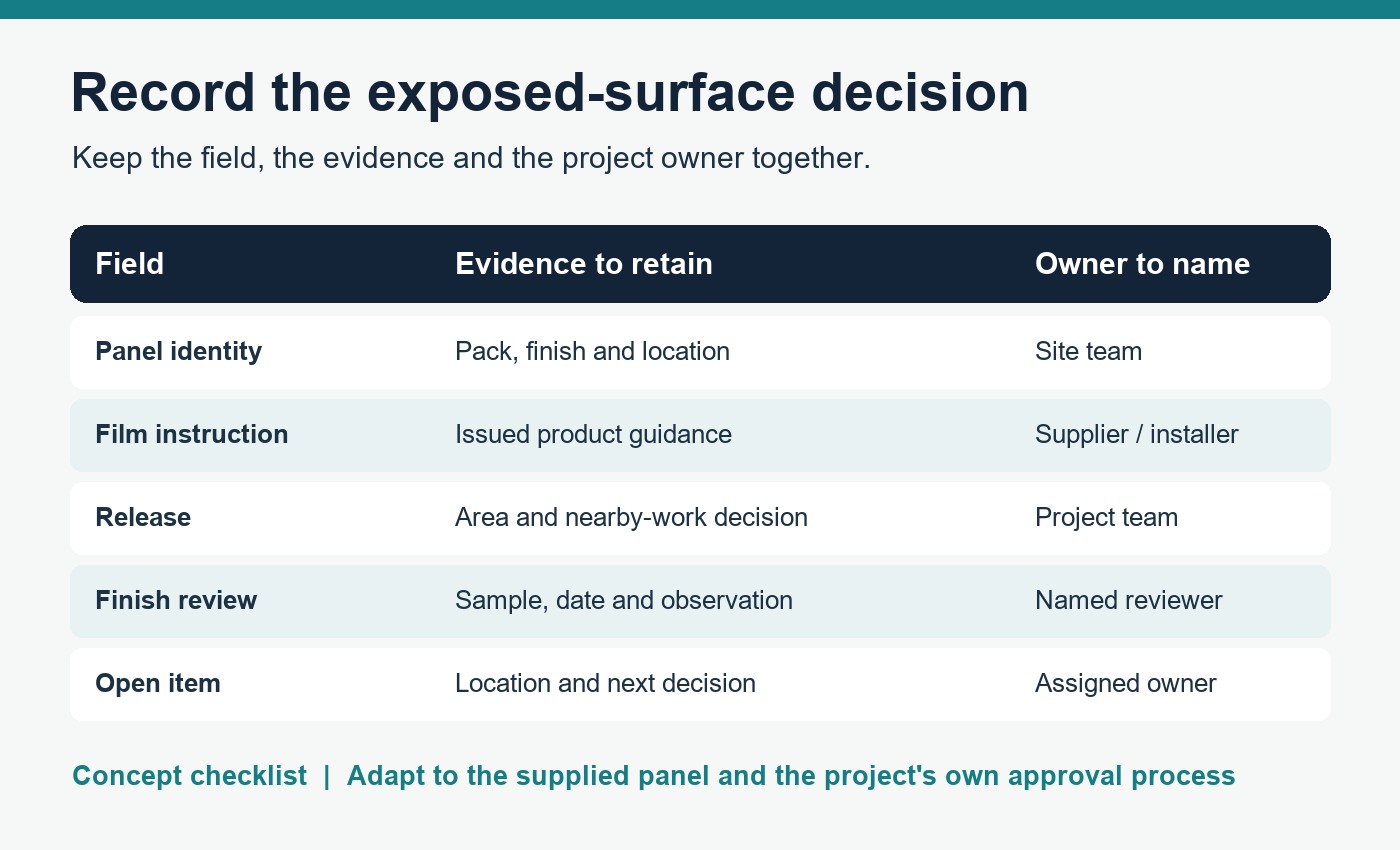
Inspect the exposed finish against a controlled reference
After removal, look at the agreed inspection area under the project’s viewing conditions. Compare the panel with the approved physical sample or mock-up, not only a catalogue image or phone photograph. Note the location, date, panel group, finish code, sample reference, and any visible observation. An observation is a record for review; it is not an automatic finding about cause or responsibility.
If a concern appears, pause the affected decision and keep the panel identity, photographs, and relevant documents together. The first-panel review provides a useful way to connect an observed finish to a controlled sample and an accountable project decision. The designer, installer, and supplier can then review the issue within their respective scopes.
Leave a record that the next crew can use
| Record | Why it matters |
|---|---|
| Product and pack identity | Shows which supplied panel group was exposed. |
| Applicable film instruction | Prevents a rule for another product from becoming the site’s default. |
| Area, date, and responsible reviewer | Connects the decision to an installed location. |
| Finish and control-sample reference | Gives later reviewers the comparison basis. |
| Open observations and owner | Keeps unresolved items visible until the project team decides them. |
These entries can live in the project’s existing inspection system. At final handover, the facade record should point to the final panel and finish references so a later team can identify the installed material.
Need the supplied-product details checked?
Send the panel or pack identifier, finish reference, and relevant project condition through Jinxiang’s contact page. We can help confirm information issued for the supplied panel; the project team decides installation, inspection, cleaning, and acceptance.
FAQs
Is there one removal deadline for every ACP protective film?
No single deadline should be assumed across products. Check the instructions issued for the specific panel and film, then agree the site sequence with the responsible project team.
Can the film be left on because other trades are still working?
That requires a project decision against the supplied film instructions and the site’s protection plan. Record the condition and owner rather than leaving the decision implicit.
Do arrows on protective film matter?
Some manufacturers use film markings to indicate panel direction. Confirm what the markings mean for the supplied product before fabrication or installation; do not infer it from another brand’s guide.
Does removing the film approve the installed facade?
No. It exposes the face for inspection. Design, installation, finish, and compliance decisions follow the project’s own approvals and evidence.
What should be recorded if an exposed panel looks different?
Record its location, panel and finish references, viewing condition, photographs, and the controlled sample used for comparison. Assign the concern to the responsible team for review.
Background example of product-specific guidance: ALPOLIC’s directional-film note. Its instructions apply to ALPOLIC products; use the instructions supplied for the panel on your project.