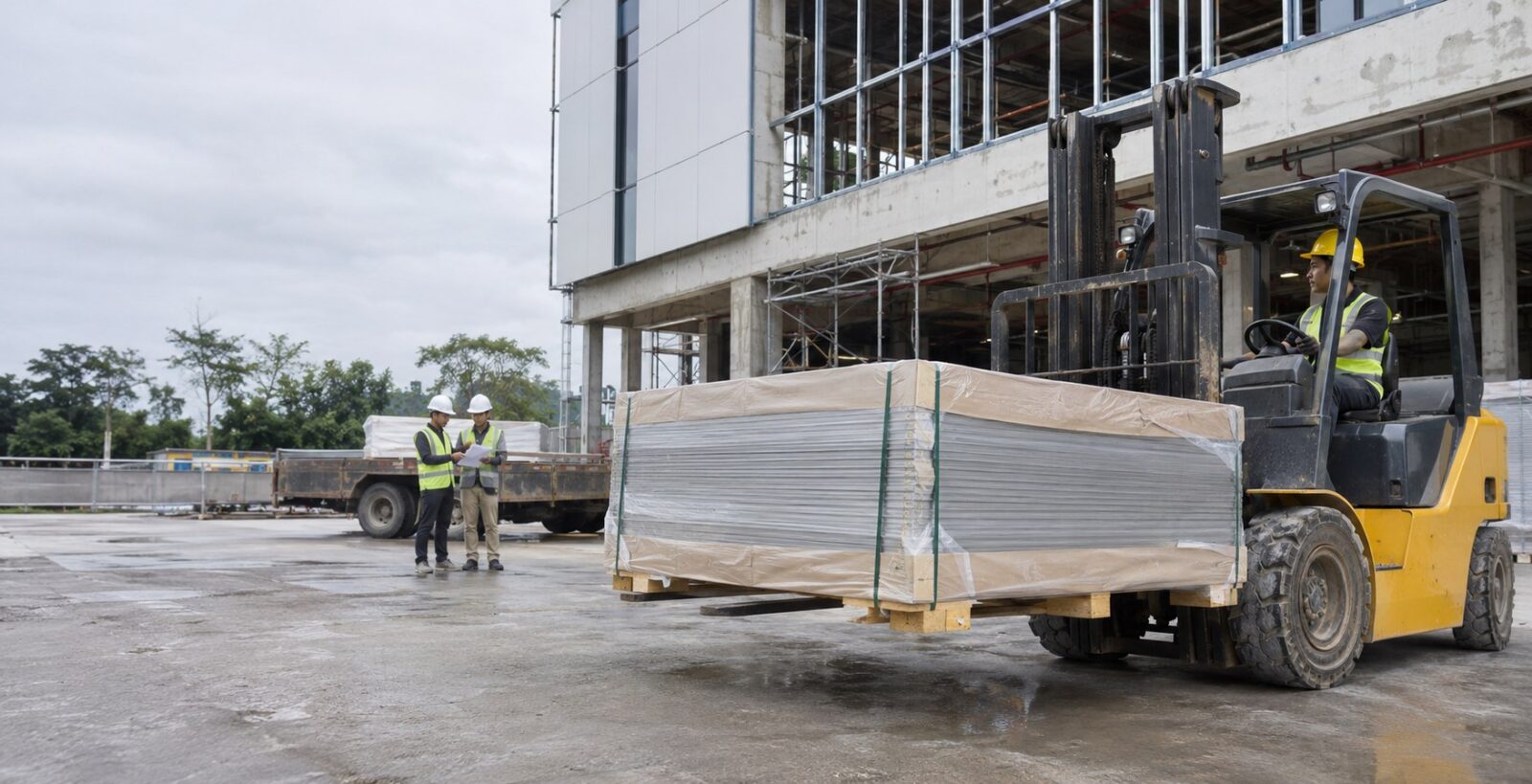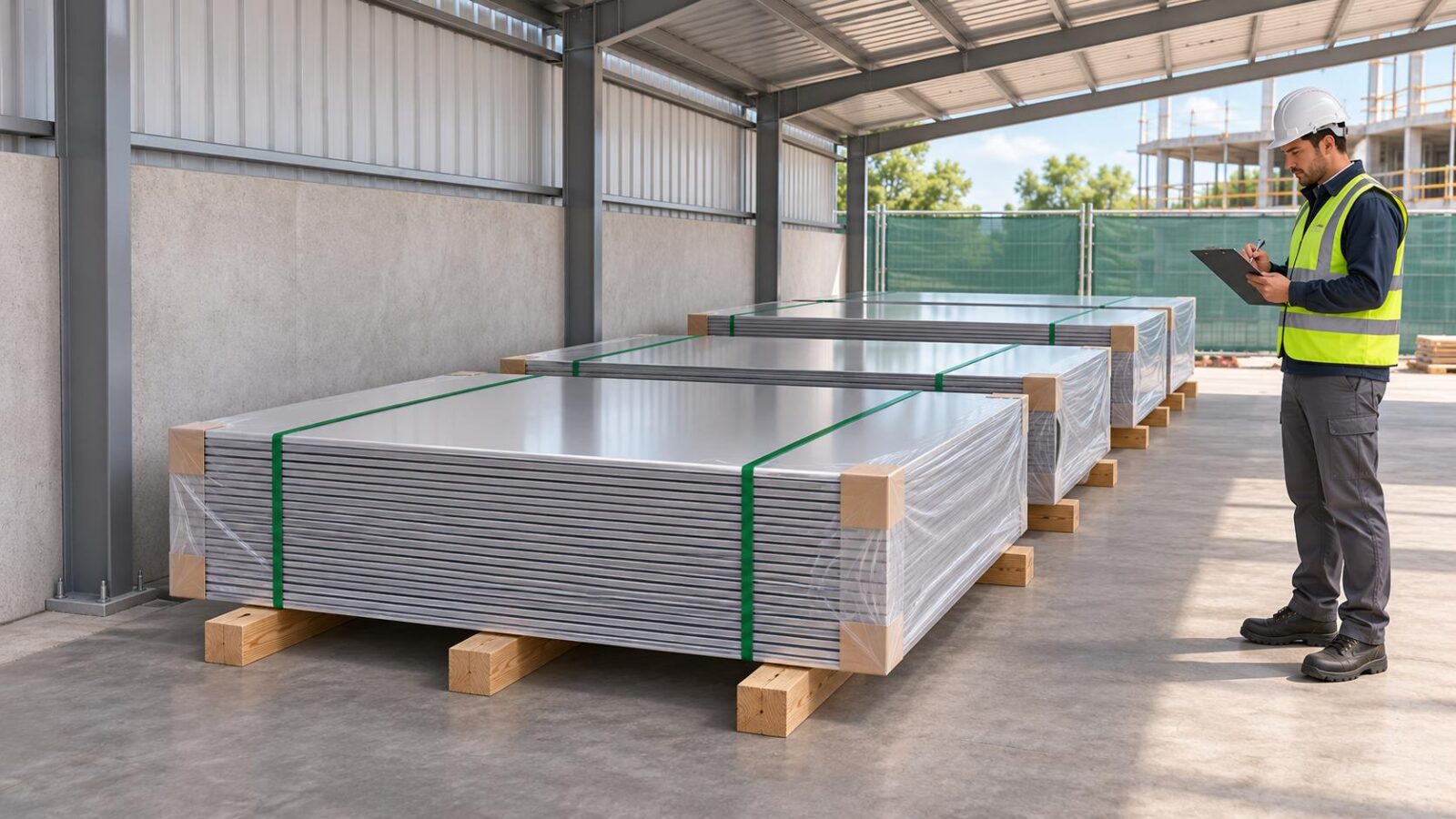

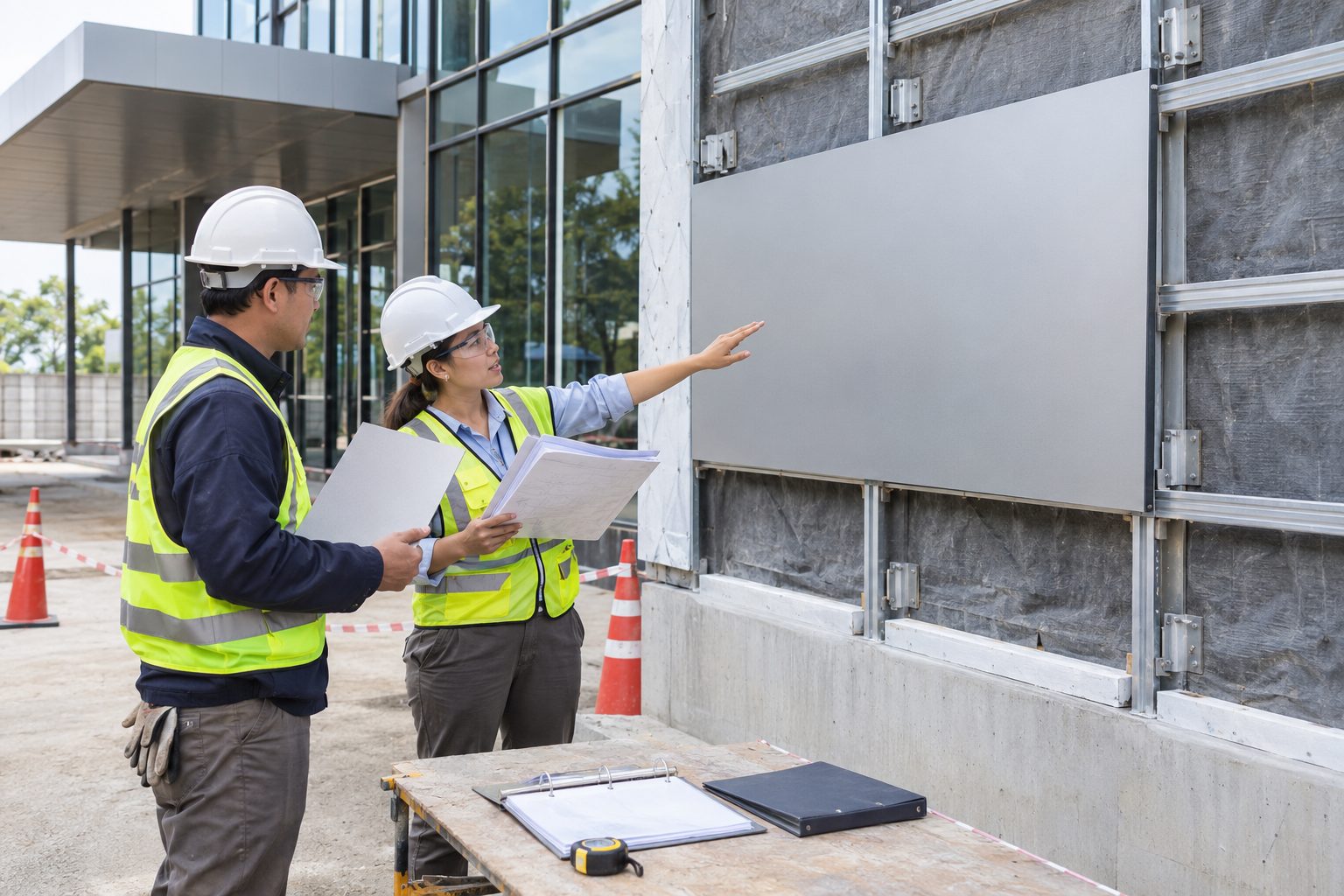
Concept visual: a generic first-panel review, not a customer project, approved installation method or inspection record.
The first ACP panel is in place. Its colour looks close, the joints appear orderly from the work area, and the crew is ready to continue. This is exactly when a quick visual impression can turn into an expensive assumption.
A first-panel review gives the project team a controlled pause before the same choice is repeated across a larger area. The purpose is not to turn one panel into a technical certificate. It is to connect what has been installed to the current panel identity, finish reference, drawings and open site records, then assign any unresolved decision to the correct project role.
Define what the first-panel review can confirm
The review can show which panel was used, which documents and finish reference were compared, what was observed and what still needs a decision. It can also expose a simple mismatch before more panels leave their packs.
It cannot, by itself, prove structural adequacy, fire compliance, substrate acceptance or approval of the fixing system. Those matters remain within the project’s design, engineering, quality and site-safety processes. The earlier ACP installation release checklist covers the handover before work begins; this review starts with the actual installed result.
1. Match the installed panel to the released panel group
Begin with identity. Record the panel or pack reference used for the first area and connect it to the current panel schedule or other controlled project record. A protective-film colour, a handwritten location or a remembered finish name is not a reliable substitute.
- Identify the panel group and the elevation or zone where it was installed.
- Confirm the product and finish references used in the release record.
- Keep any earlier delivery, storage or condition note connected to the same identifier.
- Stop the comparison if the identity trail is missing or contradictory.
Where the product description itself is unclear, compare it with the relevant aluminum composite panel information and the order documents issued for the project. A supplier can help check its own product record, but the project team controls the installed-location decision.
2. Compare the finish with a controlled reference, not memory
Colour and surface appearance change with viewing angle, protective film, light, distance and surrounding materials. The useful question is therefore not “does it look right to me?” It is “which controlled sample, code or approved reference is being used for this comparison?”
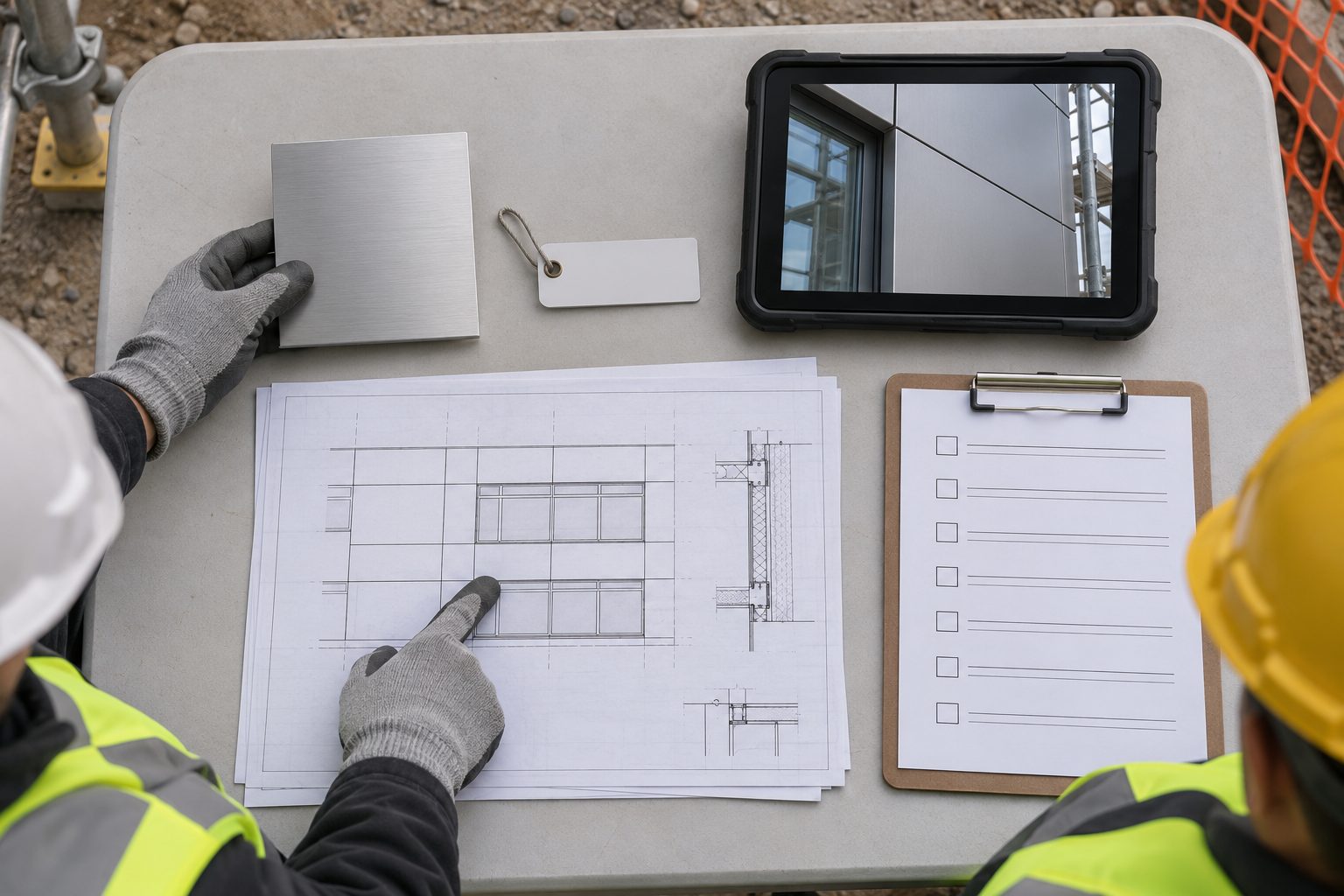
Bring that reference to the review and record the viewing context. If the finish cannot be connected to a controlled reference, return to the ACP finish approval checklist before wider installation turns the uncertainty into a repeated site condition.
3. Read the current drawing at the installed condition
A drawing may be current in the document register yet absent from the workface decision. Note the drawing or schedule revision used for the first panel and the installed zone it addresses. If the site condition creates a question the document does not resolve, record the question instead of filling the gap with an informal assumption.
Keep the wording neutral. “Current drawing reference not available at review” is a traceable observation. “Installation is wrong” is a conclusion that may exceed the evidence and the reviewer’s authority.
4. Separate observations from technical acceptance
A useful first-panel record says what was compared and what was seen. It does not make every observation a defect, and it does not turn the absence of an obvious problem into engineering approval.
For example, the team may record that the panel identity matches the released group, the controlled finish reference was present, and one drawing question remains open. The responsible project party can then decide whether work proceeds, pauses or continues only in a defined area. This preserves the boundary between product confirmation and project acceptance.
5. Give the next shift a clear decision trail
The record should survive the people who attended the review. Include the panel group, location, document revision, finish reference, observations, open items, responsible role and the project’s decision status. Use the project’s own quality or coordination system rather than inventing a parallel approval route.
Photographs can help reconstruct the discussion, but they need a location and date and should remain connected to the written record. A close-up without context is easy to misread later.
A short first-panel review sequence
- Which panel group and installed zone are under review?
- Which release record, schedule and drawing revision apply?
- Which controlled finish reference is available for comparison?
- Which observations are factual, and which require a technical decision?
- Who owns each open item under the project process?
- What decision will the next work area or shift be able to follow?
Need to confirm the product record behind the first panel?
Send the panel schedule, current drawing revision, finish reference and product details through the contact page. We can help check the product and document information issued for the order; engineering, site safety and installation approval remain subject to the project’s controlled process.
FAQs
Does a first-panel review approve the complete ACP installation?
No. It records a comparison at the first installed condition. Wider installation approval remains with the project’s authorised design, quality and site processes.
Can a site photograph replace the controlled finish reference?
No. A photograph can support the record, but lighting, camera processing and viewing conditions make it unsuitable as the only finish reference.
What if the panel identity cannot be matched to the schedule?
Keep the uncertainty visible and pause the product comparison until the identifier is traced. Do not rely on appearance or memory to assign the panel to a project zone.
What can the ACP supplier check at this stage?
The supplier can help confirm its product description, finish reference, pack information and issued documents. It does not replace the project engineer, designer, contractor or authorised inspection process.
Should every observation be labelled a defect?
No. Record what was observed without assigning a cause or acceptance status beyond the evidence. The responsible project role should make the technical or contractual decision.