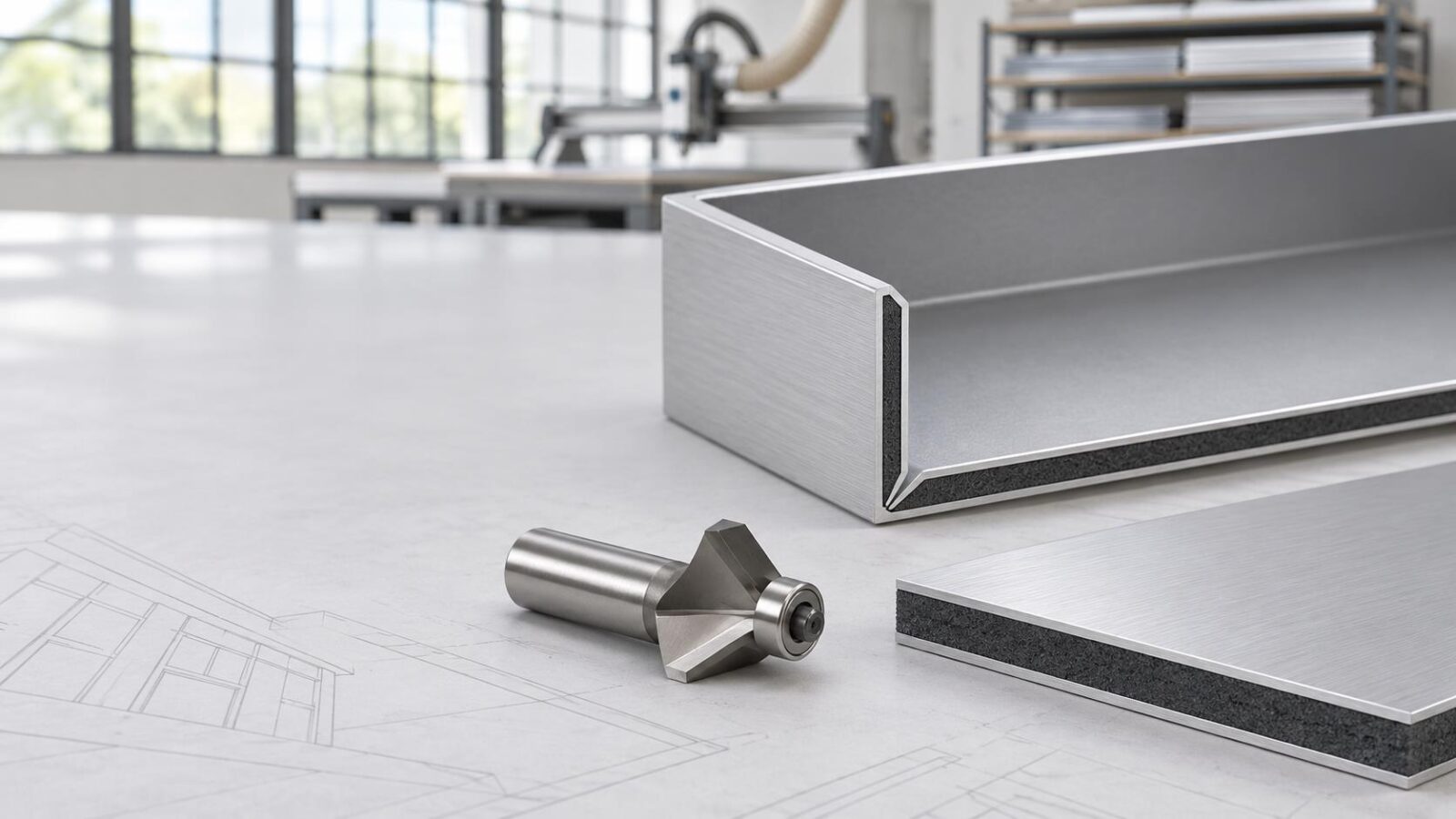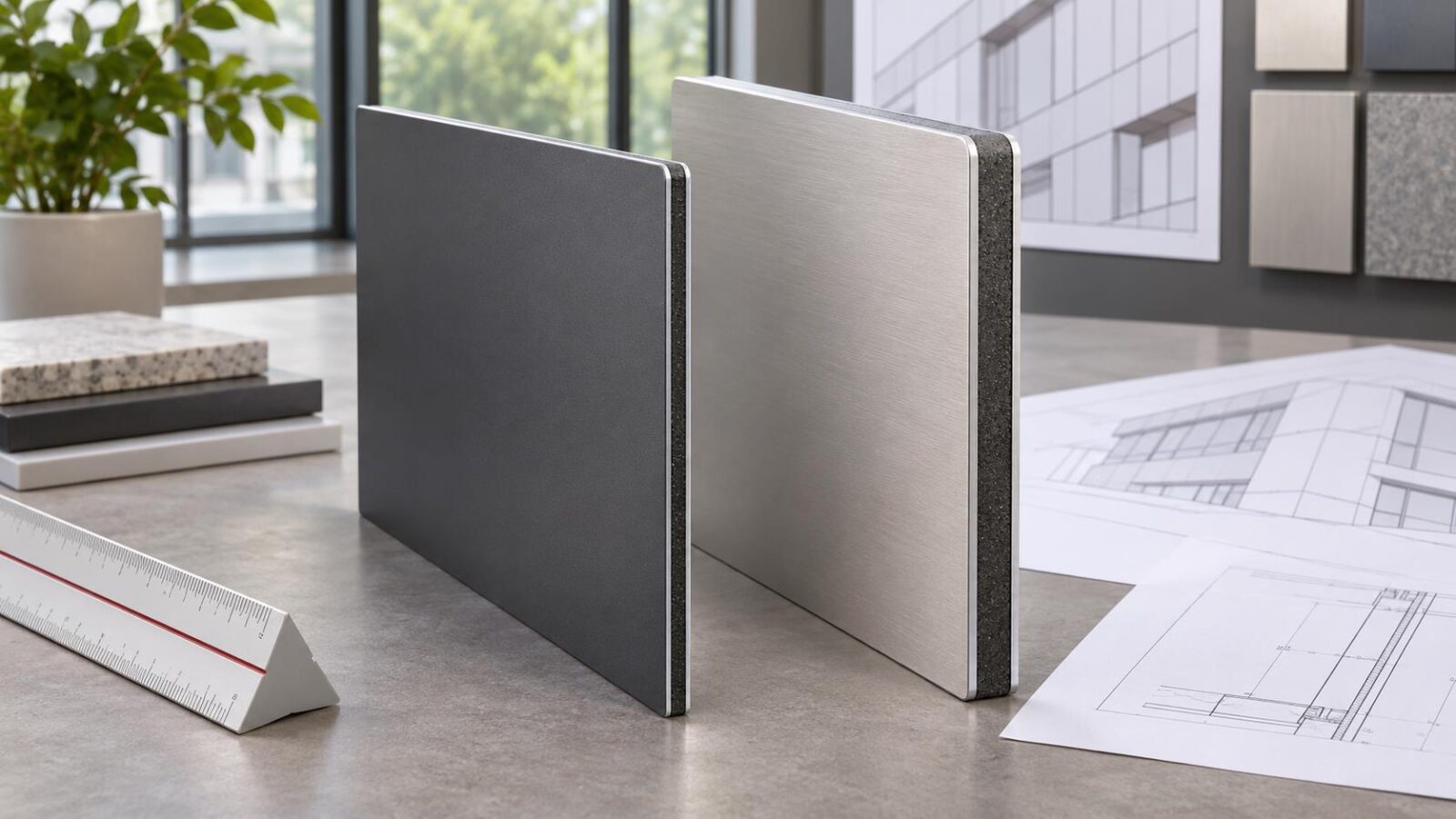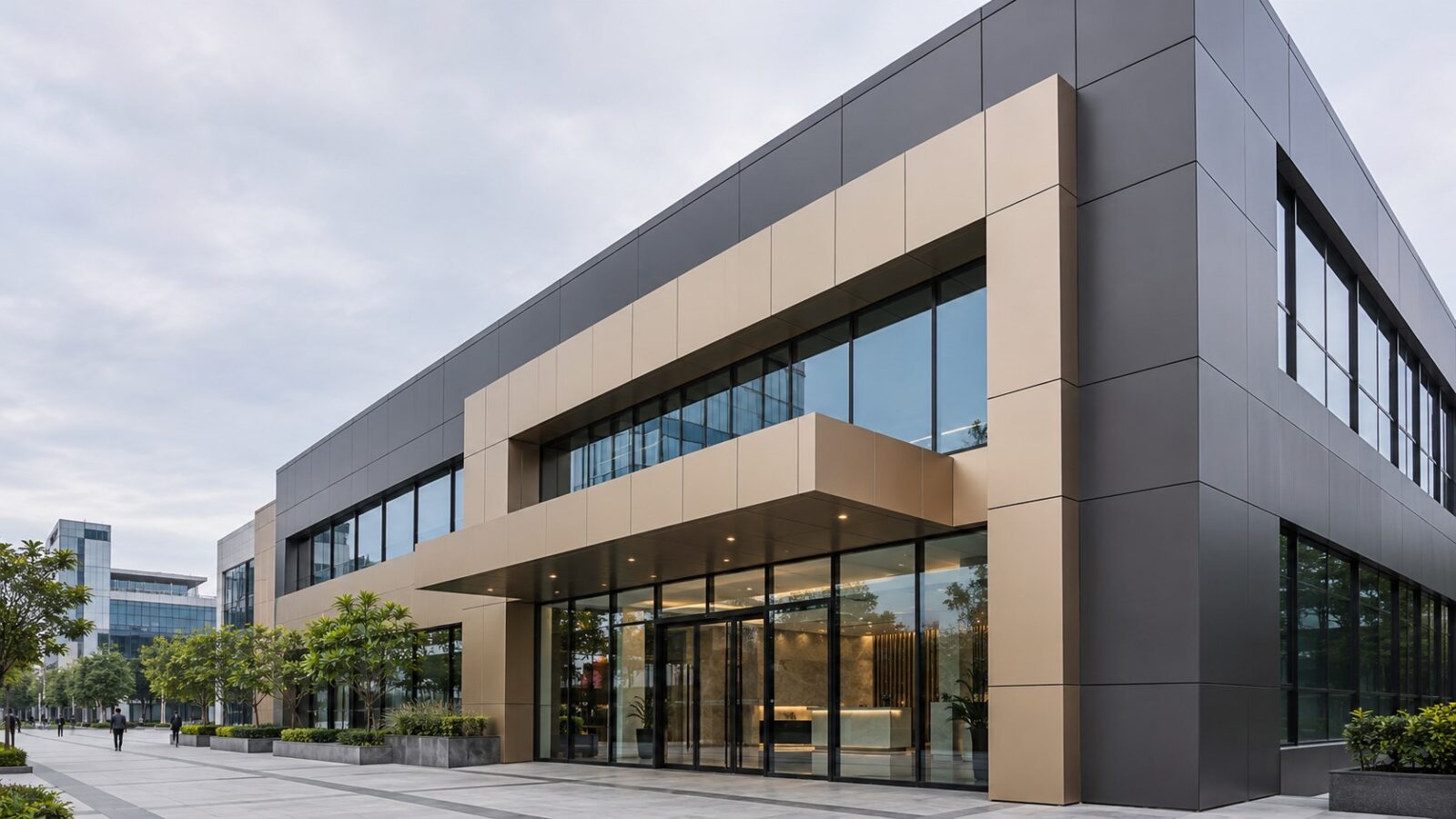

An ACP panel may look straightforward on a façade drawing, but the result is decided before the first panel is cut. A groove that is too deep, a fold made in unsuitable conditions, or a fixing detail copied from a different system can turn a clean elevation into rework on site.
This checklist helps project buyers, fabricators and installers agree on the information that should be confirmed before fabrication. It is a general planning guide—not a substitute for approved panel-system drawings, structural design or the specific manufacturer’s processing instructions.
Start with the panel specification, not the router setting
Before routing, record the exact product being fabricated: total panel thickness, aluminium skin thickness, core type, coating, finish direction and intended application. These inputs affect the suitable groove geometry, folding behaviour and fixing method.
If the project requires a fire-rated façade, confirm the required classification first. This guide to EN 13501-1 A2-s1,d0 for ACP façades explains why the classification must be checked against the tested system rather than treated as a label alone. If you are still comparing panel constructions, review A2 ACP vs solid aluminium vs honeycomb panel before locking the fabrication method.
| Pre-fabrication question | Why it matters | Who should confirm it |
|---|---|---|
| What is the exact panel construction? | Core and skins influence processing limits. | Buyer + panel supplier |
| Is the visible face directional? | Metallic, brushed and some special finishes need a controlled orientation. | Architect + fabricator |
| What fold and cassette profile is shown? | Groove location is taken from the finished geometry, not guessed at the machine. | Fabricator + façade designer |
| How is the panel fixed? | Riveted, screwed, cassette and adhesive systems use different detailing. | Installer + engineer |
| What movement and drainage provisions apply? | Exterior cladding must accommodate approved system details. | Façade designer + installer |
Routing and folding: control the variables that show up on the finished face
For a V-grooved fold, machining is normally performed from the reverse side so the outer aluminium face remains continuous. The groove shape and the material left at its base govern the bend radius and the visual quality of the corner. Product-specific manuals differ by core and panel family, so do not transfer a numerical groove depth from one brand or core grade to another.
- Create the fold lines in the approved fabrication drawing.
- Make a trial piece from the same panel batch and finish.
- Inspect the groove, fold radius and visible face under normal light.
- Record the approved tool, cutter, depth setting and feed conditions for the production run.
- Re-check the first finished cassette before processing the full quantity.
ALUCOBOND’s routing and folding reference describes the same core principle: groove the reverse side, retain the front cover sheet and a thin layer of core, then fold along the routed line. PREFA also notes that groove depth and folding conditions must match the specific core and recommends particular care with A2 material in its processing guidance.
Four checks before approving a fold
- Face protection: Keep the coated face protected during handling and use a clean, supported work surface.
- Groove consistency: Check the full groove length for uneven depth, swarf or interruption before folding.
- Fold condition: Make the fold on a level support; low temperature and repeated bending can increase the risk of a poor finish.
- Corner appearance: Check the visible radius, coating condition and alignment—not just the nominal angle.
For panels being specified by thickness, 3mm vs 4mm ACP panels is a useful starting point. Thickness alone, however, does not define whether a panel can be used in a particular cassette or façade system.
From flat panel to cassette: make the fixing detail part of the drawing set
Fabrication and installation cannot be planned as separate conversations. The cassette return, corner treatment, stiffener position, drainage path, supporting rail and fastener type should all be coordinated before panels are routed.
For commercial façade work, use the approved system details to confirm:
- panel module dimensions and joint widths;
- fixed and sliding-point provisions where required by the system;
- cassette returns, corner reinforcement and stiffener locations;
- subframe material, spacing and alignment tolerances;
- ventilation, drainage and perimeter closure details;
- isolation between dissimilar materials where the approved system calls for it.
This is also where supplier selection matters. A factory quotation should identify the panel construction, coating, tolerances, packing and agreed technical documents—not only a price per square metre. See what to look for in an ACP factory supplier, not a trader for a supplier-checking framework.
A simple site handover checklist
| Checkpoint | What to record |
|---|---|
| Panel identity | Product code, colour/finish, batch and protective-film status |
| Approved sample | Trial fold/cassette reference, date and responsible reviewer |
| Drawing revision | Current fabrication and installation drawing number |
| Fixing system | Rail, bracket, fastener and accessory references |
| Visual direction | Orientation mark for directional finishes |
| Site condition | Storage, handling route and any on-site fabrication limits |
| First-install inspection | Joint consistency, alignment, corner quality and face protection |
The coating also deserves a separate sign-off. Read PVDF vs polyester coating for ACP when the exposure conditions or expected service environment are part of the project brief.
When to ask for a project fabrication review
Ask for a technical review before production when a project includes large cassette modules, special finishes, tight returns, curved elements, A2-core material, a non-standard subframe or an unfamiliar fixing system. The most useful package is a panel schedule, elevation, section details, material requirement, finish sample and target delivery location.
Send us your panel schedule and drawings for a project quotation. We can help you align panel specification, finish, packing and the information needed for the fabrication discussion.
Frequently asked questions
Can every ACP be V-grooved and folded in the same way?
No. Core type, panel construction, finish and the manufacturer’s system guidance can change the suitable tooling, groove shape and remaining material. Use a trial piece and the applicable product manual before production.
Does a 4mm panel automatically suit exterior cassette cladding?
No. Thickness is one part of a specification. The core classification, skin thickness, coating, module size, subframe and approved fixing system must also suit the project.
Why do folds sometimes crack or look uneven?
Common causes include an incorrect or uneven groove, an unsuitable folding condition, inadequate support, repeated bending or a process that does not match the specific panel construction. Inspect a trial fold before releasing the batch.
What should I send when requesting a fabrication quotation?
Provide the application, panel dimensions and quantity, required core and finish, colour reference, drawings or sketches, intended fixing method, destination and requested delivery date. If details are not final, state what is still under review.