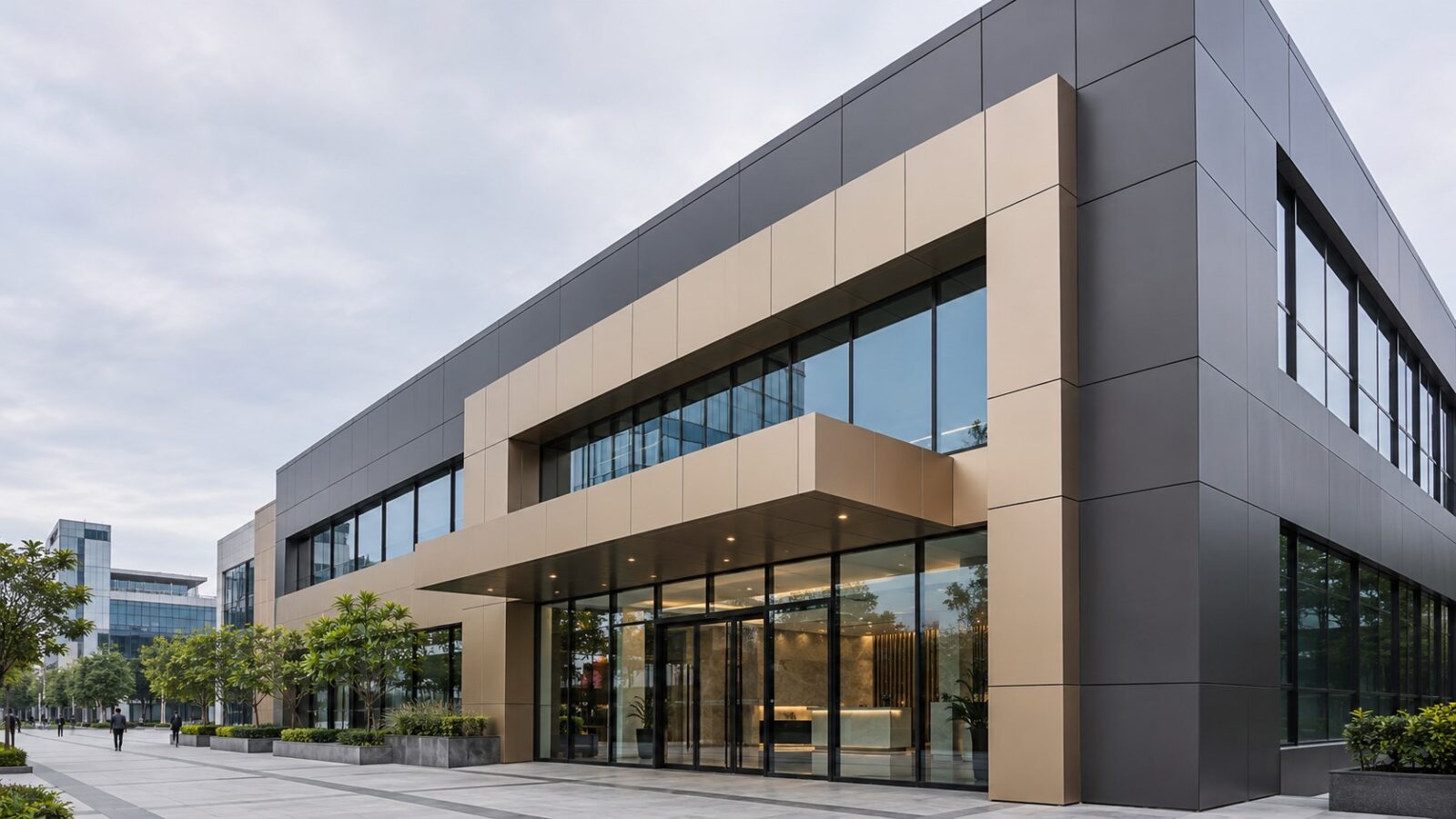

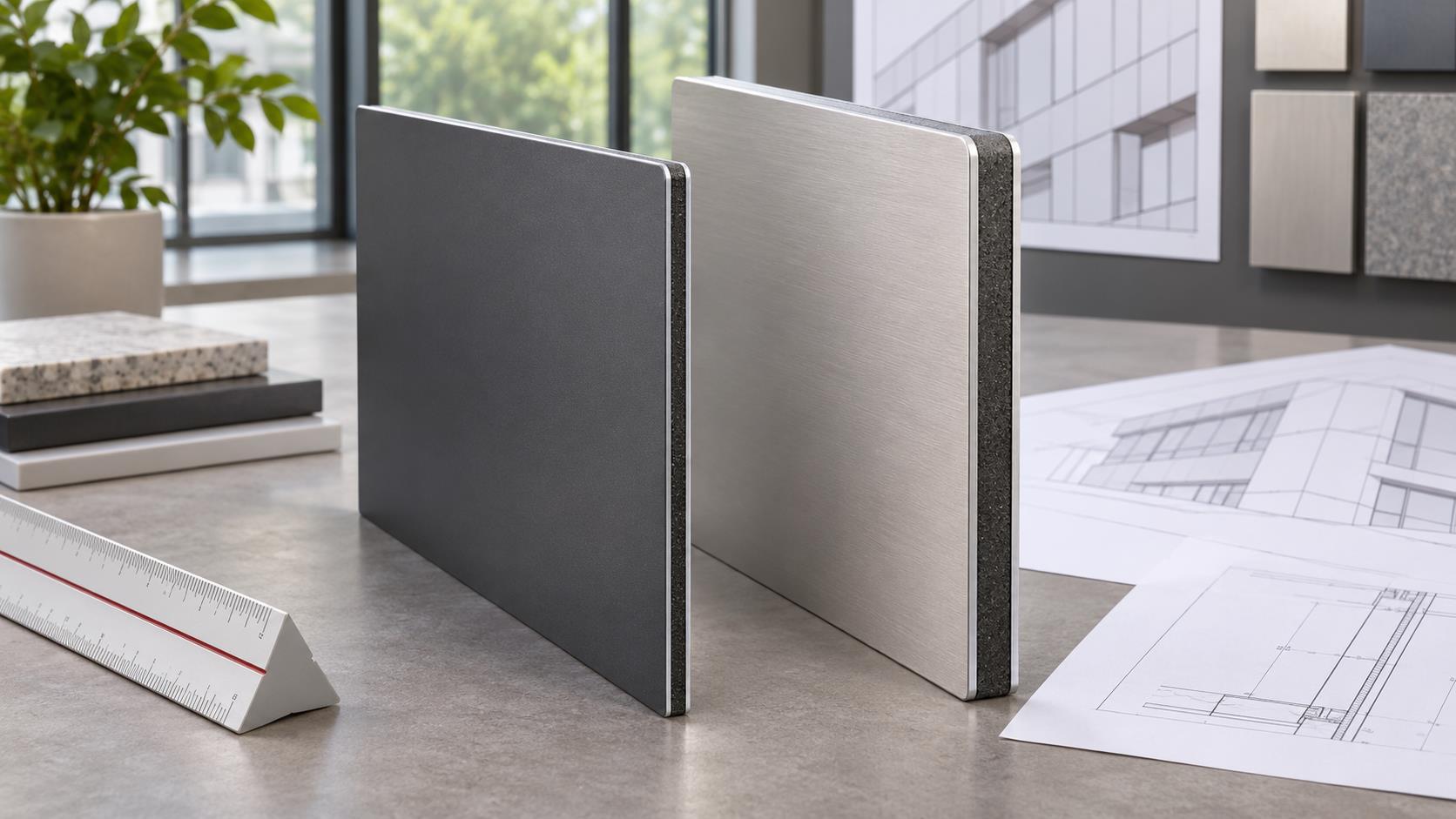
The difference between 3mm and 4mm aluminium composite panel is not simply one extra millimetre. Panel size, fixing layout, exposure, fabrication and the finished appearance all affect which option makes sense for a project.
For an interior wall, a small sign fascia or a folded display detail, 3mm ACP may be a practical option. For an exterior commercial facade or a larger panel layout, 4mm ACP is commonly considered because the added overall thickness can support a stiffer finished panel. The final specification must still be reviewed with the project drawings, subframe and applicable requirements.
Start with the application, not the thickness
Before asking for a quote, define where the panel will be used:
- Exterior facade, canopy or shopfront
- Interior wall, ceiling or fit-out detail
- Signage, display or printing surface
- Folded cassette, routed return or flat fixed panel
ACP is a finishing material, not a substitute for structural design. The responsible project team should confirm the support system, fixing method and performance requirements for the application.
3mm vs 4mm ACP: the practical comparison
| Selection point | 3mm ACP | 4mm ACP |
|---|---|---|
| Typical project discussion | Interior finishes, signage, displays and compact fabricated elements | Exterior facades, commercial cladding, shopfronts and larger panel layouts |
| Panel feel | Lighter overall construction; confirm suitability for panel size and support spacing | Generally offers greater overall stiffness for the same panel format, while still needing suitable support and fixing |
| Fabrication | Can be cut, routed and folded when compatible with the panel construction and fabrication method | Also suited to routed-and-folded work; drawings should confirm returns, joints and fixing details |
| What to verify | Panel dimensions, impact exposure, core, skin thickness and backing support | Panel dimensions, wind and weather exposure, subframe, joints, core, skin thickness and coating |
This table is a starting point, not a structural rule. A smaller 3mm panel on a closely supported interior wall may perform very differently from a wide 3mm panel on an exposed facade. Compare the complete proposed construction, not overall thickness alone.
Why panel size and subframe matter
Two panels of the same thickness can behave differently when their dimensions and support layouts change. Larger modules, wider unsupported areas and exposed locations can make flatness and fixing details more critical.
Share the panel schedule early. It should show panel widths and lengths, joint layout, support positions, corners, returns, openings and any special cut-outs. That gives the supplier and fabrication team enough information to discuss a suitable panel construction before production.
Choose the core and coating for the project environment
Overall thickness does not define fire performance or weather resistance. Ask for the panel core designation and the documentation relevant to the project. Where a project requires a fire-rated solution, confirm the exact panel construction and the requirements that apply to the complete facade system.
The surface finish also needs to match the application. For exterior work, review the specified coating, colour sample and exposure conditions. For a detailed comparison, read PVDF vs Polyester Coating for ACP. If an A2-grade solution is being considered, see A2 ACP vs Solid Aluminium vs Honeycomb.
Fabrication details to resolve before ordering
ACP can be cut, routed and folded into corners, cassette returns and feature details. The result depends on the approved drawings, selected panel construction, tooling and installer method.
Before placing an order, align on:
1. Panel sizes, joint widths and direction of any metallic or brushed finish.
2. Routing, folding and return details at edges, openings and corners.
3. Core, skin thickness and coating requirements for the approved application.
4. Subframe, fixing method, packing sequence and installation access.
5. Sample approval, colour tolerance and batch-control process.
Common mistakes when comparing 3mm and 4mm ACP
Choosing by price per sheet only
A lower sheet price does not show the full project cost or suitability. Compare the core, aluminium skin thickness, coating, panel size, fabrication and packing requirements in writing.
Treating 4mm as an automatic exterior approval
4mm ACP may be a common discussion point for exterior applications, but no thickness alone proves compliance. Exposure, panel dimensions, support layout and local project requirements remain part of the decision.
Leaving fabrication until after the order
Late changes to return depth, joint layout, cut-outs or panel sequence can create avoidable delay. Share elevations and key details before production.
Get a project-specific ACP recommendation
JINXIANG can discuss available ACP options for facade, signage and commercial-interior applications. Send the application, project location, panel dimensions, required quantity, preferred finish, drawings and delivery target.
We will use that information to discuss suitable thickness, surface, core and packing options before quotation. Final suitability and compliance should be confirmed for the specific project by the responsible professionals.
Start with the right panel construction
Frequently Asked Questions
Is 4mm ACP always better than 3mm ACP?
No. A 4mm panel can offer a stiffer overall construction for a comparable panel format, but the suitable choice depends on the application, module size, support layout, fabrication details, core and project requirements.
Is 3mm ACP suitable for exterior cladding?
Suitability cannot be decided by thickness alone. Exterior projects should be assessed against panel dimensions, exposure, support and fixing system, core and local requirements. Confirm the complete proposed construction before specifying or ordering.
Does ACP thickness tell me the aluminium skin thickness?
No. Overall ACP thickness and aluminium skin thickness are different values. Ask the supplier to state both front and back aluminium skin thicknesses, along with core and coating, in the quotation.
What information should I send for a 3mm or 4mm ACP quotation?
Provide the application, project location, panel sizes, estimated quantity, preferred finish, core requirement, drawings where available, delivery destination and required schedule. This helps the supplier discuss an appropriate proposal rather than quote a generic sheet.